

This post may contain affiliate links. If you book through them, I may earn a small commission at no extra cost to you. I only recommend personally curated options that make sense for cruise passengers and independent travellers.
Most people book a Scotland cruise thinking it’s a self-contained thing. Scotland on the label, Scotland on the map, Scotland front and centre. That’s rarely how these sailings actually work — and understanding it early saves a lot of quiet frustration later.
Scotland’s cruise ports don’t behave like the ones that came before them on the itinerary. They’re spread out. Tendering is common. Transfers take longer, and the order the ship calls in changes what’s worth doing where. Treat a Scottish port like a quick walk-off city stop and you’ll feel the difference the moment you step ashore.
This guide is the planning layer: how a Scotland cruise is routed, what each port is actually for, and how to build a week that doesn’t repeat itself.
Main Cruise Ports in Scotland
Scotland’s main cruise ports are South Queensferry (Edinburgh), Greenock (Glasgow), Kirkwall (Orkney), and Lerwick (Shetland) — the four that appear on nearly every itinerary, not because they’re the most scenic, but because they’re the most frequently called at. Everything else — Invergordon, Portree, Stornoway, Aberdeen, Dundee, Rosyth, and Oban — depends on your specific line, ship, and route.
Scotland’s cruise ports split into two types: gateways to a city, and gateways to a landscape.
City gateways
- South Queensferry — reaches Edinburgh
- Rosyth — also reaches Edinburgh; ships use one or the other depending on size and cruise line
- Greenock — reaches Glasgow
Landscape gateways
- Invergordon — Highland distilleries and Loch Ness
- Kirkwall (Orkney) — Neolithic stone circles
- Lerwick (Shetland) — wild, remote coastline
- Portree (Skye) — Highland scenery, Old Man of Storr
- Stornoway (Lewis) — Hebridean landscape, Harris tweed country
- Oban — west-coast whisky and seafood, gateway to Mull
Also on some itineraries
- Dundee — single-city day, V&A and the waterfront
- Aberdeen — single-city day, granite architecture
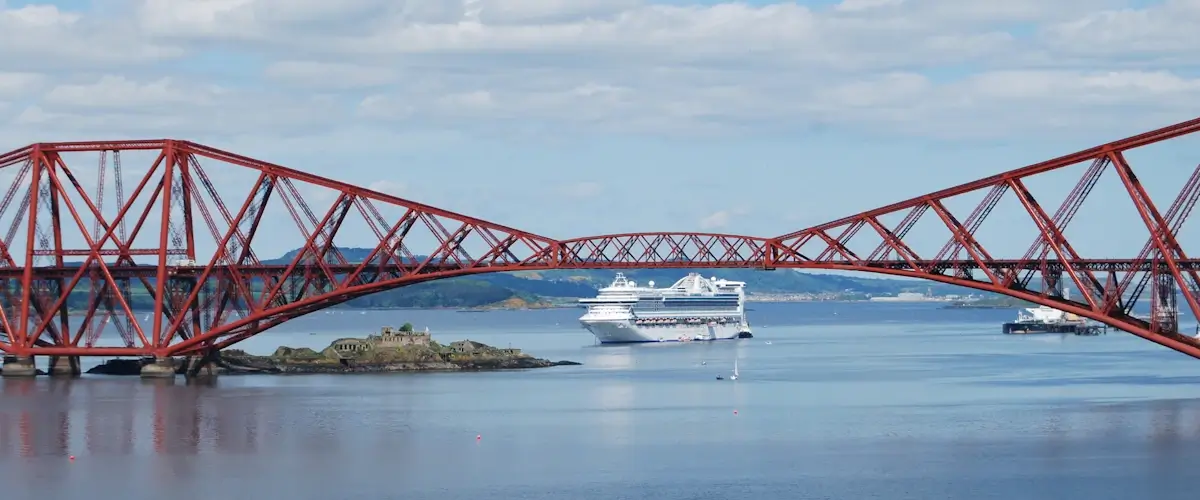
One thing to check before you sail: several different ports get listed as “Edinburgh” on an itinerary. Most ships anchor off South Queensferry, but some dock at Rosyth in Fife, and a few use Leith or Newhaven closer to the city. The day is different at each — confirm the actual port name with your operator, not just “Edinburgh.”
How a Scotland Cruise Itinerary Works
A cruise to Scotland is usually part of something bigger. Scotland is the highlight, not the whole story — and that affects pacing, port time, and how much energy you’ve got left by the time you arrive.
It’s usually a round-Britain loop. For most passengers, Scotland sits midway through a sailing that also takes in England and Ireland. You might start or end in Southampton, run up one coast, loop the top via Orkney and Shetland, and come back down the other side toward Belfast or Dublin.
That routing splits the country into two arcs, and knowing which arc a port sits on tells you what kind of day to expect:
| Arc | Scotland Cruise Ports | What this side gives you |
|---|---|---|
| North-east | South Queensferry (Edinburgh), Rosyth, Dundee, Aberdeen, Invergordon, Kirkwall, Lerwick | Cities, the Highlands, whisky country, and some of the densest prehistoric sites in Britain. This is the heavier historic route – stone circles, old ports, big landscapes, and proper north-sea weather. |
| West | Greenock (Glasgow), Oban, Portree (Skye), Stornoway | Glasgow and Loch Lomond, island landscapes, the Hebrides, and west-coast scenery. This is the softer-looking but wilder-feeling side – sea lochs, ferry towns, mountains, and weather that changes its mind by the minute. |
England and Ireland Cruises Are Usually Part of the Same Sailing
For most passengers, Scotland sits mid-way on a cruise itinerary that includes Ireland and England. You might start or end in Southampton, England, sail north to Scotland, loop around the north coast via the Orkney and Shetland Islands, and then sail to Belfast, Ireland.
That’s where expectations can slip when arriving at Scottish ports. Many cruise ports in England are typical walk-off docks, shorter distances, quicker wins. Scotland doesn’t usually work like that. Ports are more spread out. Tendering is common. Transfers take longer. Days feel tighter, especially if the weather or timing shifts.
It’s not a problem. It’s just different. But if you’re expecting Scotland to behave like the ports that came before it, you’ll feel that difference straight away. It’s also a reason why cruise ships tend to stay longer in port than on Caribbean or Mediterranean itineraries – sometimes up to 12 hours.
Scotland Cruises That Extend Further — Norway, Iceland, or Transatlantic Routes
Some cruises don’t stop with Scotland. They continue north into Northern Europe, with ports in places like Norway, Iceland, or even Greenland. These routes often include more island stops and more tender ports, which means getting ashore can take longer and plans need to stay flexible.
You’ll usually see fewer ports overall on these sailings, but longer days at sea between them. Weather plays a bigger role, especially the further north you go.
Other cruises reach Scotland as part of a transatlantic crossing, most commonly sailing from New York. These itineraries might include a U.S. stop early on, then a run of ports in Scotland before finishing elsewhere in Europe.
How to Choose Activities at Each Scotland Cruise Port
Every Scotland cruise port has one activity worth building your day around, and a clear signal for when that’s not the move. The table below maps both — what to do at each stop, and when to ease off instead — using the on-the-ground detail a brochure won’t give you straight.
| Port | Docks or tenders | Best day here | Take it easy if… |
|---|---|---|---|
| South Queensferry (Edinburgh) | Tender | The capital – Edinburgh Castle, the Royal Mile, the Old Town. Tender in and walk straight into town; no transfer required for a local day. | …you’ve done Edinburgh before. The High Street and an Inchcolm boat trip make an easy day without the city push. |
| Rosyth | Dock | Edinburgh, 15 miles south – or the shorter run into Dunfermline and Culross, which some passengers rate as the stronger day. | …you’d rather skip the transfer logistics. Rosyth is a secure working dockyard – you can’t walk out, so every option needs a taxi, bus, or tour booked in advance. |
| Invergordon | Dock | The Highlands – Loch Ness, Inverness, Cawdor Castle, and distilleries. | …you’re not fussed about Nessie. The drive eats a fair chunk of the day. |
| Kirkwall (Orkney) | Dock or tender | Neolithic Scotland – Skara Brae, Ring of Brodgar, Maeshowe, and St Magnus Cathedral. | …prehistory isn’t your thing. Kirkwall itself is easy, but quiet. |
| Lerwick (Shetland) | Dock or tender | Archaeology and wildlife – Jarlshof, the coast, and Fair Isle knitwear. | …the weather’s closed in. The best sites are exposed, and Shetland doesn’t do gentle drizzle by halves. |
| Stornoway (Lewis) | Dock or tender | The Hebrides – Callanish Stones, Harris, and tweed country. | …you’ve only got a few hours. The best of Lewis usually means a drive out. |
| Portree (Skye) | Tender | Landscape – Old Man of Storr, Trotternish, and the Quiraing. | …it’s a tender day and the swell is up. Book a tour, don’t try to wing Skye from the pier. |
| Oban | Tender | West-coast whisky and seafood; gateway to Mull. | …you’ve already done a distillery. The town is still a pleasant walk with a harbour view. |
| Greenock (Glasgow) | Dock | Glasgow and Kelvingrove, or Loch Lomond. | …you’d rather not commit to a 40-minute transfer each way. |
| Aberdeen | Dock | Royal Deeside, Dunnottar Castle, or Balmoral. | …you’re docked at the far berth. Check the walk first before assuming the city is right there. |
| Dundee | Dock | V&A Dundee, RRS Discovery, or St Andrews. | …the industrial walk-in puts you off. It’s usually a taxi job into the centre. |
Building a Week That Doesn’t Repeat Itself
This is where most cruise passengers lose value — not by picking bad excursions, but by picking the same one three times. Scotland’s ports cluster around a handful of themes, and a good week takes one strong example of each rather than four of one.
- Whisky — pick one. Invergordon for Highland distilleries, or Oban for the west coast. You don’t need both.
- Prehistoric / UNESCO — Orkney (Kirkwall) is the heavyweight. If it’s on your itinerary, that’s your standing-stones day; let Lewis and Shetland be about landscape and wildlife instead.
- Cities — Edinburgh is the one to commit to. Glasgow (from Greenock) is a strong second; Dundee and Aberdeen are lighter, better as a change of pace than a third full city day.
- Island landscape — Skye (Portree) is the standout. With Skye on the list, you don’t need to chase scenery hard everywhere else.
- Stay-local days — build in at least one. Tendering, transfers and all-aboard pressure add up across a week. A relaxed day in Queensferry or Oban is a feature, not a wasted port.
Two rules that save the most grief:
- Pre-book the capacity-limited sights before you sail. Edinburgh Castle and Skara Brae sell out on cruise days; walk-up often isn’t an option by the time the first coaches arrive.
- Respect the tender days. They run on the ship’s timetable, not yours — don’t stack your most ambitious excursion on a tender port if the forecast is rough.
Tender or Dock — Why It Changes Your Day
Whether the ship ties up alongside or anchors offshore shapes the day more than the distance to town does.
- Docked ports (Greenock, Invergordon, Aberdeen, Dundee, Rosyth) — you walk off when you like and back when you like. Flexible, less clock-watching.
- Tender ports (South Queensferry, Portree, and the larger ships at Stornoway, Lerwick, Kirkwall and Oban) — you go ashore by boat, in waves, on the ship’s schedule. Build slack in at both ends and watch the last-tender time.

The captain makes the final call on the day based on weather and swell, so a planned dock can become a tender at short notice in the north. Keep some give in any independent booking.
When to Cruise Scotland
The season runs roughly April to October. Outside it, the northern ports get operationally difficult and the weather turns genuinely hostile. Inside it, the experience shifts month to month.
| Months | Conditions | Best for |
|---|---|---|
| April–May | Cool, often blustery up north; vivid green landscapes; fewer crowds. | Wildlife, puffins returning, quiet sites, and better fares. |
| June–July | Best average weather; long daylight; near-24-hour light in Shetland at midsummer. | Full-day island excursions and peak marine wildlife. |
| August | Edinburgh in full Festival swing – city busy and pricey; quieter elsewhere. | Festival visitors and thinner crowds at northern ports. |
| September–October | Softer light, autumn colour, more weather risk up north, and fewer ships. | Photography, whisky-harvest season, and small-ship availability. |
Common First-Timer Mistakes
Cruising to Scotland is its own thing, and the usual slip-ups aren’t about poor planning — they’re about assuming Scotland works like the Caribbean or the Mediterranean.
Treating Scottish ports like walk-off city stops. Many cruisers arrive expecting to step off, look around, and decide on the spot. That works elsewhere. Here it usually means hovering near transport and losing momentum early — by the time a plan forms, a chunk of the day is gone.
Overloading the day “just in case.” Booking something further out while still expecting time to wander near the port feels sensible when planning. On the day it creates pressure in both directions, and something ends up rushed or skipped.
Assuming weather is just a comfort issue. It’s not solved with the right jacket. Weather affects access and timing — visibility drops, roads slow, tenders pause. Plans don’t just feel worse; they change shape entirely.
Edinburgh — Why It Trips People Up
Edinburgh is the anchor of the cruise, and also the easiest stop to misjudge. From South Queensferry it’s about 10 miles to the city — roughly 30 minutes on the X99 CruiseLink to George Street, beside St Andrew Square.
The problems start in town. Edinburgh isn’t flat — the New Town to the Old Town is a steep climb. Most of the headline sights cluster around the Royal Mile, which makes it tempting to cram in too much. Eat early or late; queues build fast around lunchtime.

The return is where people get caught out — not because it’s confusing, but because it’s easy to leave too late. The bus back isn’t a private transfer; you might wait, you might hit traffic. The cruisers who look most relaxed are the ones who picked a cut-off time and stuck to it.
For the full breakdown, see the South Queensferry cruise port guide and the Queensferry to Edinburgh transport guide. If your itinerary says Edinburgh but the port is Rosyth, that’s the Fife side — covered in the Rosyth cruise port guide.
Big Ship or Small Ship
The size of the vessel decides which Scotland you actually see. Large ships stick to the main ports above and bring the full shore-excursion machine — easiest if you want the infrastructure in place. Small ships (under ~200 passengers) reach places the big ones can’t: remote Hebridean anchorages, the Sound of Mull, smaller island stops. Worth the premium if the islands are the whole reason you’re going.
Frequently Asked Questions
What are the main cruise ports in Scotland?
South Queensferry (Edinburgh), Invergordon (Highlands), Kirkwall (Orkney), Lerwick (Shetland), Portree (Skye) and Greenock (Glasgow) are the regulars, with Aberdeen, Dundee and Stornoway appearing on many itineraries.
One thing to watch: “Edinburgh” can mean South Queensferry, Rosyth, Leith or Newhaven. Check the exact port name before planning transport or shore excursions.
What’s a typical Scotland cruise itinerary?
Most Scotland cruises are part of round-Britain or British Isles sailings. They usually work up one coast and down the other – the east side for Edinburgh, the Highlands and the Northern Isles, then the west for the Hebrides and the Clyde.
Edinburgh, usually South Queensferry, is often near one end of the loop. Some lines call there early in the itinerary, while others save it for the final stretch.
How many ports does a Scotland cruise visit?
A week-long Scotland cruise typically calls at four to seven Scottish ports, usually split between the north-east and the west coast.
Longer Norway, Iceland or transatlantic routes may include fewer Scottish stops, with more sea days or a wider spread of ports outside Scotland.
Do I need to pre-book shore excursions in Scotland?
For capacity-limited sights, yes. Edinburgh Castle, Skara Brae in Orkney and popular island tours can sell out on cruise days, so book before you sail if they are must-sees.
For easier ports, you can often decide nearer the time. But tender ports, remote islands and long-distance sights reward planning. Scotland looks small on the map. It does not always behave that way on the road.
When is the best time to cruise Scotland?
June and July usually give you the best mix of longer daylight, better average weather and full-day touring options.
April–May and September–October can be better for fewer crowds, lower fares and stronger light for photography, but the far north carries more weather risk. Shetland and Orkney do not ask permission before turning rough.
How This Guide Fits with the 2026 South Queensferry Schedule
This guide is written to match how cruise days actually play out at South Queensferry, not how they’re marketed. The port patterns, timing pressure, and Edinburgh logistics all line up with the ships listed on the 2026 South Queensferry cruise schedule, so you can connect dates on the calendar with what the day is likely to feel like on the ground.
Used together, the schedule tells you when ships arrive. This guide explains what that arrival usually means once you step ashore.
Image attribution:
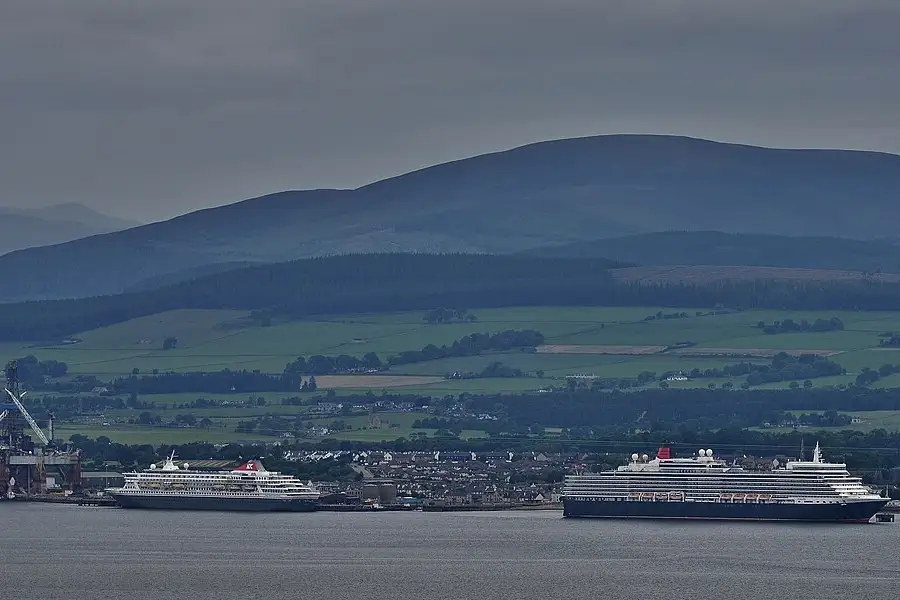
Picture: Cruise ship at Invergordon Michael Garlick, CC BY 2.0 via Wikimedia Commons.
Picture: Suicasmo, CC BY-SA 4.0 via Wikimedia Commons.
Picture: Cruise ship at Oban The Carlisle Kid, CC BY 2.0 via Wikimedia Commons.

Scott Gibson grew up in South Queensferry and runs queensferry.net. The Forth and Edinburgh guides come from lived experience — tender days at Hawes Pier, cruise traffic, the shortcuts into the city. For the wider Scotland cruise ports, he draws on friends in some of the port towns alongside port, operator and transport sources — so the detail holds up on the ground, not just on paper. Clear directions, real timings, no brochure fluff.