

This post may contain affiliate links. If you book through them, I may earn a small commission at no extra cost to you. I only recommend personally curated options that make sense for cruise passengers and independent travellers.
The 2026 festival has ended, 2027 dates are to be announced, and the cruise-day advice below applies every August.
The first thing to know about the Edinburgh Festival is simple: there isn’t one.
In August 2026, Edinburgh ran on overlapping programmes, separate ticket systems, packed pavements and hotel prices that stop being funny after the second search. The Fringe gets the headlines. The Tattoo sells early. The Book Festival, Art Festival, Film Festival, and International Festival all pull different crowds into the same city.
That does not mean you should avoid it. It means you should plan it properly.
This guide covers the 2026 dates, what to book first, where to stay, what a realistic trip costs, and how to build a few sane days around a city that turns into a very expensive machine every August.
| Detail | Information |
|---|---|
| Core festival period | 7–31 August 2026 |
| Main events covered | Fringe, International Festival, Military Tattoo, Art Festival, Book Festival and Film Festival |
| Edinburgh Festival Fringe shows | More than 3,500 shows |
| Fringe venues | 300+ venues across the city |
| Typical Fringe ticket price | Free–£30+ (many paid shows sit around £8–£18) |
| Fringe printed programme launch | 4 June 2026 |
| Military Tattoo dates | 7–29 August 2026 |
| Accommodation in August | Often £100–£400+ per night depending on location, room type and booking date |
Arriving by Cruise Ship During the Edinburgh Festival: Blessing or Curse?
Some cruise passengers book August sailings because the Edinburgh Festival is on. Others tender into South Queensferry, look at the crowds heading for the buses, and only then realise what they have landed in.
That can be brilliant. It can also be a long, busy day if you expected a normal Edinburgh port stop.
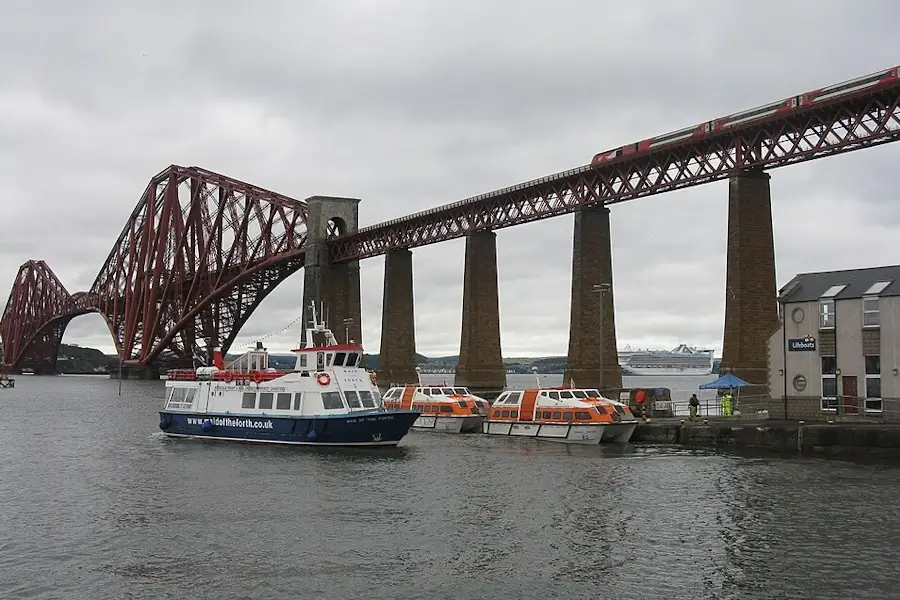
Did you know that Edinburgh on a Scotland Cruise could refer to one of several ports? It’s worth checking which Edinburgh port your cruise ship will use so you can plan your day ashore, regardless of whether you visit a show at the Edinburgh Festival or not.
The Case for Going to Edinburgh
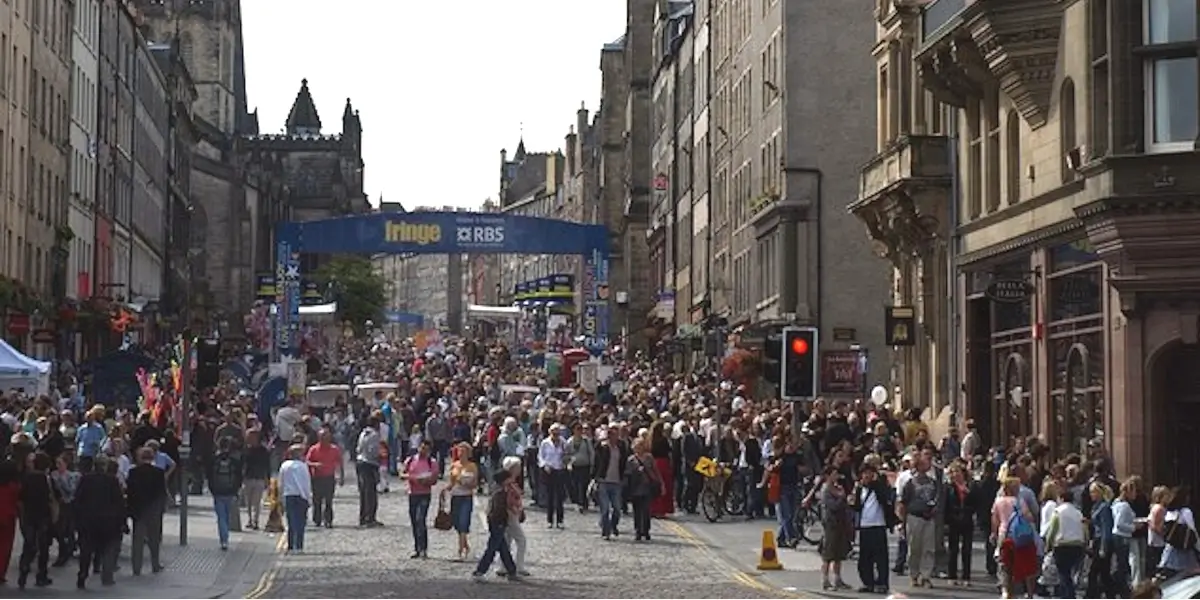
Edinburgh in August has an energy you will not get at any other time of year. The Royal Mile is packed with street performers, pop-up shows, flyers, pipes, comedy previews, and organised chaos. For first-time visitors, it can feel like Scotland turned the volume up.
The upside is atmosphere. You do not need to book three shows to enjoy it. A walk from Waverley to the Castle gives cruise passengers a strong taste of the festival without needing a complicated schedule.
The downside is pressure. Streets are slower, buses are busier, restaurants fill quicker, and timed attractions leave less room for mistakes. If you go into Edinburgh, pick one clear target: the Royal Mile, one pre-booked show, Edinburgh Castle, or a simple Old Town wander.
Do not try to “do Edinburgh” and “do the Festival” in one short port day. That is how the day starts grinding its teeth. Instead, use this guide discover if Edinburgh shore excursions are worth it on a cruise day.
The Case for Avoiding Edinburgh
For some cruise visitors, August is the best possible reason to skip the city centre.
South Queensferry is not a consolation prize. You have Hawes Pier, the Forth Bridge, the harbour, the High Street, waterfront pubs, boat trips, and quieter views across the Firth. It feels calm because Edinburgh is taking the hit.
This works especially well if you dislike crowds, have mobility concerns, have already visited Edinburgh, or want a slower Scottish port day without fighting festival footfall.
Day trips away from Edinburgh can also make more sense in August. Stirling, the Kelpies, Falkirk Wheel, Fife, or Outlander locations give you a proper shore excursion without being pulled into the city’s busiest month.
Cruise Visitor Verdict
Edinburgh during the Festival is worth it if the buzz is the reason you want to go.
If you only wanted a clean, easy sightseeing day, August makes Edinburgh harder. Not impossible. Just busier, slower, and less forgiving.
For cruise passengers, the smart move is simple: choose the Festival, or choose the escape. Drifting into the middle and hoping it works out is the risky bit.
| If this sounds like you | Best August cruise-day choice | Why it works |
|---|---|---|
| You want festival atmosphere without booking a show | Go to the Royal Mile | Free street performers, strong Edinburgh energy, no ticket commitment. |
| You want to see one Fringe show | Book one daytime show in advance | Gives structure without risking a rushed return to the ship. |
| You want Edinburgh Castle | Pre-book an early timed ticket | Walk-up queues in August can eat into a short port day. |
| You dislike crowds or have mobility concerns | Stay in South Queensferry | Flat waterfront sections, bridge views, cafés, harbour, and less pressure. |
| You have already visited Edinburgh | Take a shore excursion away from the city | Stirling, Falkirk, Fife, or Outlander locations avoid the worst festival congestion. |
| Your ship has a short call | Keep the day local or do one Edinburgh target only | Festival crowds make tight DIY schedules riskier than usual. |
Edinburgh Festival 2026 Dates — Six Festivals, One August (for reference only)
Important: 2027 dates to be announced when confirmed by all the festival organisers.
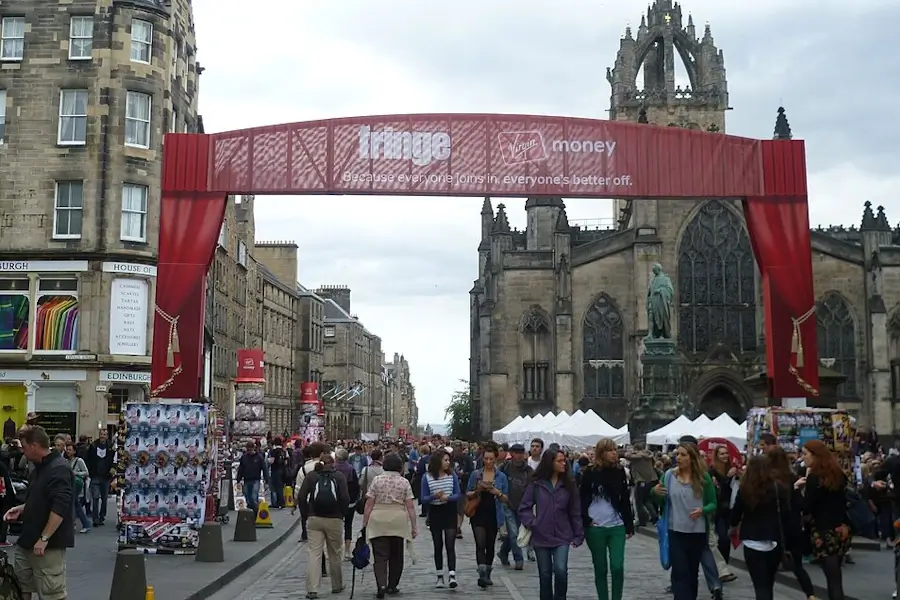
The confusion around “the Edinburgh Festival” is understandable. It refers, loosely, to a cluster of separate events that have grown up together over nearly eighty years. They share a city and a month but operate independently — different organisers, different ticket systems, different audiences.
Here is what happened in August 2026:
Edinburgh Festival 2026 dates and booking notes
| Festival or event | 2026 dates | What it is | Booking note |
|---|---|---|---|
| Edinburgh Festival Fringe | 7–31 August | Open-access festival with comedy, theatre, music, dance, spoken word and street performance. | Programme launches in early June. Book priority shows early. |
| Edinburgh International Festival | 7–30 August | Curated programme of opera, theatre, classical music, dance and international performance. | Best-known productions can sell quickly. |
| Royal Edinburgh Military Tattoo | 7–29 August | Military bands, pipes, dancers and international performers on the Castle Esplanade. | Book before most other festival planning. It sells hard. |
| Edinburgh Art Festival | 14–30 August | Visual art exhibitions and installations across galleries and public spaces. | Many exhibitions are free, but check opening times. |
| Edinburgh International Book Festival | 15–30 August | Author talks, debates, readings and book events. | Popular authors and evening events need advance booking. |
| Edinburgh International Film Festival | 13–19 August | International cinema, premieres and film events. | Shorter run, so check dates carefully before building plans around it. |
Most visitors come for the Fringe. That is the right call — it is the largest arts festival in the world, and it dominates the city’s energy throughout August.
But if you are already making the trip, it is worth knowing the Tattoo and the International Festival are running alongside it, because both require separate advance booking and both sell out at different rates from the Fringe.
The Tattoo in particular. Tickets go on sale well before the Fringe programme is published. If you want to see it — and it is genuinely worth seeing, especially if it is your first time — book it before you book anything else. It sells out.
Which week to visit
This question does not get a straight answer in most guides, so here is one.
Week 1 (7–13 August): The festival is finding its feet. Shows are still warming up, some acts preview at reduced prices, the Half Price Hut opens on the first Wednesday. Crowds are slightly lower than peak. A good week if you want to move freely around the city and pick up cheap tickets.
Week 2 (14–20 August): Generally the best week. The full programme is running, reviews have published and the buzz around standout shows is at its peak, but the Bank Holiday chaos has not arrived yet. If you have flexibility, book this week.
Week 3 (21–31 August): High energy, increasingly difficult to get tickets for shows that have gathered a word-of-mouth following. The Bank Holiday weekend (29–31 August) is the most crowded point of the entire festival. Many shows close on 30 August rather than running to the 31st. Worth going, but you lose some flexibility.
How to Buy Edinburgh Fringe Tickets
The official booking system is at edfringe.com. The same tickets are available through the EdFringe app, which is free to download and is, genuinely, the most useful tool you can have during the festival. It lets you search by genre, venue, time, and price, bookmark shows you are considering, and buy directly from your phone while standing in a queue.
The programme is usually published in early June. That is when you can start browsing and booking. Do not wait to see reviews before booking your top-priority shows — by the time four-star reviews appear in The Scotsman, the popular comedy slots are already running short on seats.
What tickets cost:
- Free shows: hundreds of them, through the PBH Free Fringe and Laughing Horse Free Festival networks. These run on a pay-what-you-think-it-was-worth model at the end of the performance. Good shows pull large rooms. Budget for a tip.
- Standard paid shows: £8–£18 for most theatre, comedy, and music performances
- Premium shows and headline comedians: £20–£30+
- Preview performances (usually first 2–3 days): often 20–30% cheaper than full-price shows
The Half Price Hut sits on The Mound, the sloped road connecting Princes Street to the Old Town. It opens on the first Wednesday of the festival and sells same-day tickets at 50% off. It is most useful in weeks one and two — by week three the shows with genuine buzz have sold their same-day availability elsewhere. Worth a visit if you are in the city and want to fill a gap in your schedule.
Walk-up tickets are available at venue box offices throughout the day. For lesser-known shows this works well, especially midweek. For anything with reviews behind it, buy in advance.
Where to Stay for Edinburgh Festival
There is no good news here, so better to say it plainly: accommodation in Edinburgh in August is expensive, scarce, and gets worse the longer you leave it. This is not an exaggeration for effect. An informal survey of Airbnb in 2026 found basic double rooms in the city centre at £200 per night at peak. Hotels in mid-range locations start around £150 at the bottom and move quickly upward from there.
The reason is partly festival demand, partly Edinburgh’s short-term let licensing restrictions, which have reduced the volume of private apartments available through platforms like Airbnb. The days of finding a reasonably priced flat on the Royal Mile in July are largely behind us.
Here is what is actually available and what it costs:
City-centre hotels
The reliable play if budget is not the binding constraint.
- Budget hotels (Premier Inn, Travelodge, Ibis) run from around £100–£150 per night when you can find availability — book these in January or February if you know your dates.
- Mid-range independents and chain hotels (Marriott, Radisson, DoubleTree) run £200–£300.
- Top hotels like The Balmoral and Caledonian sit at the top of the market; expect £400+ in August.
The advantage of a central hotel is simple — you are walking distance from the main Fringe venues, and late-night shows do not require you to think about transport.
Student halls
Underrated. Edinburgh’s universities vacate in summer and several operate their halls as short-stay accommodation through August — Edinburgh First, Queen Margaret University, and others.
Rooms are basic but clean, often with en-suite facilities, and prices are genuinely lower than hotels: typically £40–£80 per night. These book out, but they tend to hold availability longer than hotels. Worth checking directly with Edinburgh First.
Hostels
CoDE Pod in the Old Town (converted from a former courthouse, directly off the Royal Mile) is the best-positioned hostel in the city for festival purposes.
Hostelling Scotland has three central locations. Dorm beds run £25–£50 per night. If you are planning to be out from 10 am to 2 am and simply need somewhere to sleep, this is the most sensible budget option.
Apartments
Self-catering works well for groups of three or more splitting a cost, or for stays of five or more nights. Book through Booking.com or VRBO rather than Airbnb — the latter’s Edinburgh availability has contracted significantly. Expect to pay more per night than a mid-range hotel for anything central.
Staying outside Edinburgh
A legitimate option that more visitors should consider seriously. Glasgow is 50 minutes from Edinburgh Waverley on a service that runs every fifteen minutes. Accommodation in Glasgow is a fraction of the August Edinburgh rate. Musselburgh, Dalkeith, and North Berwick are closer and connected by frequent buses or trains.
South Queensferry
It’s not the obvious festival base, but it’s one of the most logical. The historic town sits ten miles west of the city centre, fifty minutes by bus on the Lothian bus service 43 — quieter, cheaper. More about the best ways of getting from Queensferry to Edinburgh.
And with Hawes Pier and the Forth bridges at your door, you’ve got some tranquility if you want a break from crowds. Here is more information I’ve compiled about things to do in South Queensferry.
The non-negotiable regardless of option: book at least four to six months ahead.
Getting to Edinburgh for the Festival
By train is the clearest choice for most UK visitors. LNER operates direct services from London King’s Cross to Edinburgh Waverley, taking around four hours and twenty minutes. Edinburgh Waverley sits at the bottom of the Old Town — you step off the train and the Royal Mile is a ten-minute walk uphill. Advance fares start around £30–£50 each way if booked early; leave it to July and you are looking at £80–£150+. Book twelve or more weeks out for the best prices.
From Manchester, Leeds, and Newcastle, both LNER and Avanti operate regular services. Edinburgh is well-connected to most major UK cities by direct or single-change rail.
By air: Edinburgh Airport (EDI) handles domestic routes from Heathrow, Gatwick, Manchester, Birmingham, and Bristol, plus direct international routes from Europe and beyond. The Edinburgh Tram runs from the airport to Princes Street in approximately thirty-five minutes; a single ticket costs £7.50. The Airlink bus (route 100) does the same journey in about twenty-five minutes and is cheaper, though less reliable in heavy traffic. Airport transfers by private car take around twenty minutes in normal conditions — considerably longer during August.
By coach: Megabus and National Express both run overnight London to Edinburgh services. Journey time is eight to ten hours. Fares start around £10–£20 each way booked in advance. Not a comfortable option, but the overnight service means you arrive in the morning and save a night’s accommodation — which, at August Edinburgh prices, has genuine financial logic.
What to Do in Edinburgh Beyond the Fringe
Shows run roughly from 10am to 3am during the festival, but most visitors will have gaps in their schedule. Edinburgh has enough to fill them — and several of the city’s main attractions book out in August just as the shows do, so the same advance-planning logic applies.
Edinburgh Castle
The Castle sits on Castle Rock above the Old Town and is Scotland’s most visited attraction. Allow two to three hours. Pre-booking skip-the-line tickets is essential in August — walk-up queues at peak times can run to forty-five minutes before you are through the gate.
The Scottish Crown Jewels and the Stone of Destiny are the centrepiece; the views from the esplanade over the city are the other reason to go.
If you don’t mind the crowds, this self-guided old town walk will take you past street performers and highlight the oldest places and buildings in Edinburgh’s capital.
The Scotch Whisky Experience
Located on the Royal Mile, next to the Castle, the Scotch Whisky Experience is Scotland’s only attraction dedicated to the five whisky-producing regions. You’ll enjoy a guided barrel-ride tour, tasting, and access to one of the world’s largest collections of Scotch.
Takes around ninety minutes. Worth booking in advance in August.
Mary King’s Close
Mary King’s Close is the preserved underground street beneath the Royal Mile, sealed off in the seventeenth century and rediscovered in modern times. Guided tours only.
The experience is as much about the storytelling as the architecture — the guides are good. Tickets run around £17–£19 for adults and sell out days ahead in August. Book online.
Arthur’s Seat
Arthur’s Seat is the ancient volcano that rises behind the Scottish Parliament at Holyrood. The walk to the summit takes around forty-five minutes from the park entrance. It is free.
The views cover the city, the Firth of Forth, and on clear days the Highlands. Go early morning to avoid the midday crowds that build up in August. Wear proper shoes — the path is uneven and the final stretch is steep. This is the one thing in Edinburgh that costs nothing and leaves the strongest impression.
For more parks and free green places to visit during August in Edinburgh, check out my guide to the best parks and viewpoints in Edinburgh.
The Palace of Holyroodhouse
Holyrood Palace is at the foot of the Royal Mile, directly opposite Arthur’s Seat. It is the King’s official Scottish residence and open to visitors when the royal family is not in residence. Allow ninety minutes. Book in advance.
Underground Edinburgh
The South Bridge Vaults and similar underground spaces beneath the Old Town — are accessible through several tour operators running guided experiences. Atmospheric in the way that only a city built on top of itself can be. Tours run throughout the day and evening; prices vary from £15–£25.
The Royal Yacht Britannia
The Royal Yacht Britannia is moored at Leith, ten minutes from the city centre by tram (direction: Newhaven). Self-guided audio tour through the former royal yacht. Allow two hours. Booking ahead in August is vital.
Harry Potter tours
Edinburgh is where J.K. Rowling wrote most of the early books, and the city’s Old Town maps directly onto the Hogwarts aesthetic. Greyfriars Kirkyard, the café on George IV Bridge, Victoria Street — multiple walking tour operators cover the connections. Book online if you want a guaranteed slot in August.
Day trips from Edinburgh
Stirling Castle is forty-five minutes by train and a natural half-day from the city. The Falkirk Wheel and the Kelpies are under an hour away. The Scottish Highlands are accessible by organised day tour — loch, glen, and distillery itineraries run daily from Edinburgh. Loch Lomond is about an hour’s drive.
Edinburgh Festival Budget — What a Trip Actually Costs
Most guides say “it is expensive” and leave it there. Here is a breakdown by spend level, covering a single day in August at festival time.
| Category | Budget | Mid-range | Premium |
|---|---|---|---|
| Accommodation per night | £25–£50 (hostel dorm) | £150–£250 (hotel or student halls) | £350+ (central hotel) |
| Shows per day | Free–£10 (Free Fringe plus tip) | £30–£50 (2–3 paid shows) | £80+ (premium shows or headline acts) |
| Food and drink per day | £20–£30 (supermarket, bakery, quick service) | £40–£60 (cafés, pub lunch, casual dinner) | £80+ (restaurant meals and drinks) |
| Transport within the city | £5.70–£6 (TapTapCap or City Day ticket) | £10–£15 (bus, tram and occasional longer trips) | £20–£30 (taxis or rideshares) |
| Attractions | Free (Arthur’s Seat, Royal Mile performers, Art Festival free venues) | £20–£40 (one or two paid attractions) | £50+ (multiple timed-entry bookings) |
| Likely daily total | £50–£100 | £200–£300 | £450+ |
The trip is won or lost on accommodation. A hostel bed versus a central hotel can change the bill by more than the cost of your shows, meals and local transport combined. Edinburgh does not become unaffordable because one Fringe ticket costs £18. It becomes unaffordable because you waited until June to find somewhere to sleep.
One practical note: the Lothian Buses day ticket (currently around £6.00 for unlimited travel on Edinburgh’s bus network) covers most of the city. Download the Lothian Buses app, buy a day ticket on your phone, and you can cross the city without hailing a taxi. In August, when every tram and bus fills up after 11 pm, this matters.
Practical Tips for First-Timers
1. Download the EdFringe app before you arrive. Programme, schedule, maps, and ticket booking in one place. It is genuinely useful, not just a gimmick.
2. Book accommodation before you book shows. The programme does not go live until June. Your accommodation decision should not wait that long. Commit to the trip, secure somewhere to stay, then sort the tickets in summer.
3. Wear layers. Edinburgh in August averages between 13°C and 20°C. It rains. Sometimes it is warm and dry for a week. You cannot predict which version you will get, so pack for both. A waterproof jacket is not optional. This guide to Edinburgh in the Rain can help you prepare well.
4. Wear flat shoes with grip. The Old Town is built on a steep volcanic ridge with cobbled streets. This is not the city for new footwear or anything with a smooth sole. By day two, your feet will explain this point more clearly than I can.
5. Leave twenty minutes between shows at different venues. The city adds fifty thousand extra people to its streets in August. Walk times stretch. Queues form. Budget accordingly.
6. Know the main venue clusters. The Pleasance Courtyard and Summerhall sit close together in the Southside — most of what you want to see is within this area. George Square Gardens and the Gilded Balloon at Teviot are ten minutes’ walk away. Assembly George Street and the Gilded Balloon Paton’s Lane are further north. Plan your day around geographical clusters rather than jumping across the city between every show.
7. Midweek is better for walk-up tickets. Friday and Saturday see the highest demand for last-minute seats. If you are flexible on timing, Tuesday to Thursday gives you better odds at the venue box office.
8. Carry some cash. Most venues take cards. Free Fringe shows and some street food vendors do not. A tip at the end of a free show is both expected and fair — the performers are not paid otherwise.
9. Book the Tattoo and Edinburgh Castle early. By June, both are running low on availability. These are not shows you can reasonably walk up to.
10. The Royal Mile is free. The half-mile from the Castle down to the Canongate is lined with performers doing ten-minute previews of their full shows throughout the day.
It costs nothing, you discover acts you would not have found on the app, and occasionally you see something genuinely remarkable between a bus tour and a whisky shop. Allow half a morning for it.
Key Takeaways
- The Edinburgh Festival ran 7–31 August 2026 and encompasses six separate events: the Fringe, the International Festival, the Military Tattoo, the Film Festival, the Art Festival, and the Book Festival
- The Edinburgh Festival Fringe is the centrepiece — 3,599 shows across 300+ venues, tickets from free to £30+, booking opened in early June via edfringe.com
- Week two (14–20 August) offered the best combination of full programming, festival energy, and manageable crowds
- Accommodation should be booked at least four to six months ahead; city-centre prices run £150–£250+ per night in August, with cheaper options available in hostels, student halls, and nearby towns
- Train is the best way to get to Edinburgh; book via Trainline twelve or more weeks ahead for the best fares
- Edinburgh Castle, Mary King’s Close, the Scotch Whisky Experience, and the Military Tattoo all require advance booking in August
- A realistic mid-range budget for shows, accommodation, food, and attractions runs £200–£300 per day in the city centre; hostels and Free Fringe shows can bring this well below £100
When was the Edinburgh Festival 2026?
The Edinburgh Festival season ran through August, with the Fringe, International Festival, Military Tattoo, Art Festival, Book Festival and Film Festival overlapping across the month. The busiest period is when several major events run at the same time, especially around mid-to-late August.
What is the difference between the Edinburgh Fringe and the Edinburgh International Festival?
The Edinburgh International Festival is a curated programme of opera, theatre, classical music and dance. The Edinburgh Festival Fringe is open-access, which means almost anyone can register a show. Most visitors who talk about “the Edinburgh Festival” are usually referring to the Fringe.
How much does it cost to attend the Edinburgh Fringe?
You can attend the Fringe on almost any budget. Many shows are free or pay-what-you-can, while standard paid shows often sit in the lower-to-mid ticket range. Big-name comedy, headline acts and premium shows cost more. Accommodation is usually the biggest expense.
Can I buy Edinburgh Fringe tickets on the day?
Yes, many shows sell same-day tickets, especially lesser-known shows and midweek performances. Popular shows, strong review picks and big-name acts should be booked ahead. If there is one show you really want to see, do not rely on walking up.
Is the Edinburgh Fringe worth visiting?
Yes, if you enjoy live performance, street energy and a city running at full tilt. The Fringe changes Edinburgh completely for August. The trade-off is crowding, higher accommodation prices and less breathing room around attractions, transport and restaurants.
What is the best week usually to go to Edinburgh Festival?
The middle of the festival usually gives visitors the best balance of full programming, strong word-of-mouth recommendations and manageable planning. The final weekend is the most intense, with bigger crowds and less flexibility.
Where is the best place to stay for the Edinburgh Fringe?
The best place to stay is the most central option you can book early and afford. Old Town, New Town and Southside put you closest to the main venues. Leith, South Queensferry, Glasgow, Musselburgh and North Berwick can work if you are happy to commute.
Do I need to book Edinburgh Castle tickets in advance?
Yes. Edinburgh Castle is extremely busy in August. Pre-booking gives you a timed entry slot and avoids wasting part of your day in a long queue. This matters even more if you are combining the Castle with Fringe shows or a short city visit.
Is it worth going into Edinburgh from a cruise ship during the Festival?
Yes, if the festival atmosphere is part of the appeal. Cruise passengers tendering into South Queensferry can get a strong taste of the Fringe by heading to the Royal Mile, watching street performers and keeping the day simple. If crowds, queues or tight return times worry you, staying in South Queensferry or taking a shore excursion away from Edinburgh may be the better choice.
Picture: Royal Mile during Edinburgh Festival Robbert W Watt, CC BY-SA 2.0 via Wikimedia Commons.
Picture: Edinburgh Fringe Upper Stage David Dixon, CC BY-SA 2.0 via Wikimedia Commons.
Picture: Royal Mile during Edinburgh Festival Brad Ferdie, CC BY-SA 3.0 via Wikimedia Commons.
Picture: Tender boats at Hawes Pier M J Richardson, CC BY-SA 2.0 via Wikimedia Commons.

Scott Gibson grew up in South Queensferry and runs queensferry.net. The Forth and Edinburgh guides come from lived experience — tender days at Hawes Pier, cruise traffic, the shortcuts into the city. For the wider Scotland cruise ports, he draws on friends in some of the port towns alongside port, operator and transport sources — so the detail holds up on the ground, not just on paper. Clear directions, real timings, no brochure fluff.