
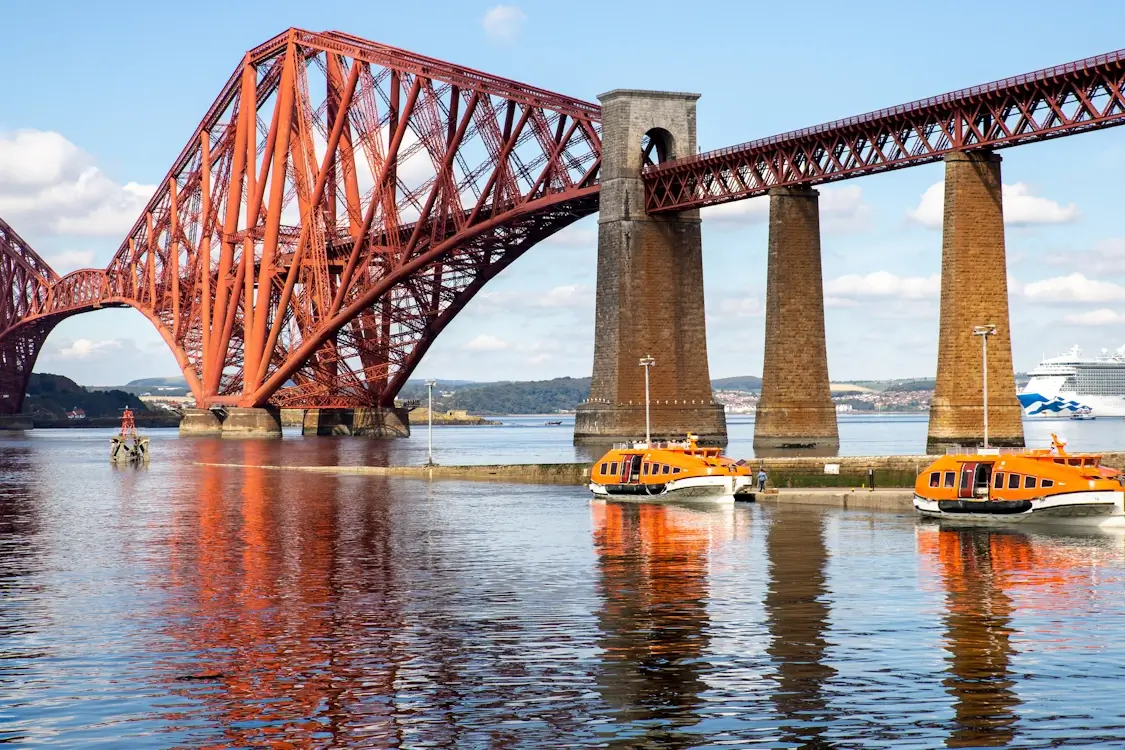

Most travel guides make cruise tender ports seem charming. But the reality of docking in the Firth of Forth and travelling on the boat to South Queensferry tender port can be an “interesting” experience. The water can be choppy, but sailing under the Forth Bridge is a unique experience.
After witnessing many cruise ship arrivals in Queensferry (Edinburgh), I’ve compiled the no-nonsense guide to the tender process as you arrive at the Hawes Pier – what actually happens, and what first-timers should know before they step ashore.
Table of Contents
- Getting Off the Ship — The Real Timeline
- The Tendering Process — What to Expect
- Landing at Hawes Pier — Your First Steps in Queensferry
- Time on Shore — How to Plan It Smart
- Ship Tours vs Going It Alone
- Bad Weather & Cancelled Tenders — What Really Happens
- Accessibility & Family Tips
- Tender-Day Packing Checklist
- FAQs — Tender Ports Made Simple
So Your Cruise Ship’s Not Docking — What a Tender Port Really Means
A tender port means your ship can’t pull up to the pier, so it drops anchor out in the water. Smaller boats—tenders—shuttle everyone to and from shore, working around shallow harbours and low bridges that keep the big ships at bay.
What if South Queensferry is on your British Isles or Scotland cruise itinerary? You’ll arrive ashore on a tender boat. Crew and local pilots run a slick shuttle from the ship to Hawes Pier—about ten minutes each way when the sea behaves.
Most travellers don’t realise how calm and controlled it all is. A Cruise Critic member put it best: “It looks chaotic, but it works if you just breathe and listen for your number.”
From the water, you get a front-row seat to the Forth Rail Bridge, the Forth Road Bridge, and the Queensferry Crossing. It’s easily one of the most memorable tender rides you’ll have on any cruise in Scotland and the British Isles.
The tenders loop all day, and guest services keep the lists tight. No cruise terminal, no chaos—just the slow, steady rhythm of boats moving under the red iron of the Rail Bridge.
Interested in how to spend your port day in South Queensferry? Check out my comprehensive guide to what to do when arriving at South Queensferry Cruise Port.
Getting Off the Ship – The Real Timeline
Once the captain gets clearance, guest services start the tendering process by calling numbers using a ticket system. You’ll hear the announcement, grab your ticket, and wait for your group to be called to the platform. Priority tendering goes first—ship tours, mobility assistance, and loyalty tiers—then everyone else in timed order.

The wait feels longer than it is. From the first call to the waterline, expect thirty to forty-five minutes, depending on the weather and dock time. I’ve seen passengers fret about missing half their morning, but there’s no need—tenders keep running in tight rotation once the first boats go.
The crew guides you down the gangway, hand on the rail, with the sea slapping at the hull and the smell of diesel in the air. The shadow of the bridge stretches over the water, and by the time you step onto Hawes Pier, you know you’ve arrived in Scotland.
A word of warning: the lower part of the pier can get slippery in wet weather. So, go steady and watch you don’t slip. For more advice on what to do after the tender, my port arrival checklist outlines why the first 30 minutes ashore matter more than most people expect.
Cruise ships such as the Majestic Princess, Nieuw Statendam, Norwegian Sky, HAL Rotterdam, and MSC Virtuosa all dock in the Forth and tender passengers ashore in smaller boats.
The Tendering Process — What to Expect
You board from the ship’s lower deck when your group is called. The crew are there at every step, steadying you as the tender rocks against the hull. The sound of metal on water sets the pace for the short trip ashore.
A cruiser on Cruise Critic said the “crew handled the sway like pros, calm voices and sure grips all round.” Most passengers agree—the crew ensures the tendering process feels controlled rather than risky. Sit near the centre if you’re prone to sea sickness; it’s the most stable seat once the engines start.
South Queensferry is one of several tender ports on Scotland cruise itineraries. If your cruise ship sails to island ports like Lerwick (Shetland), Stornoway (Isle of Lewis), or Portree (Isle of Skye) you can discover more about the tender process in these guides.
Landing at Hawes Pier — Your First Steps in Queensferry
The tender pulls in at Hawes Pier, right under the towering red Rail Bridge. Crew help everyone off, especially those who need a hand. At the top of the pier, the Hawes Inn is waiting—famous for a reason. It featured in Robert Louis Stevenson’s novel Kidnapped.
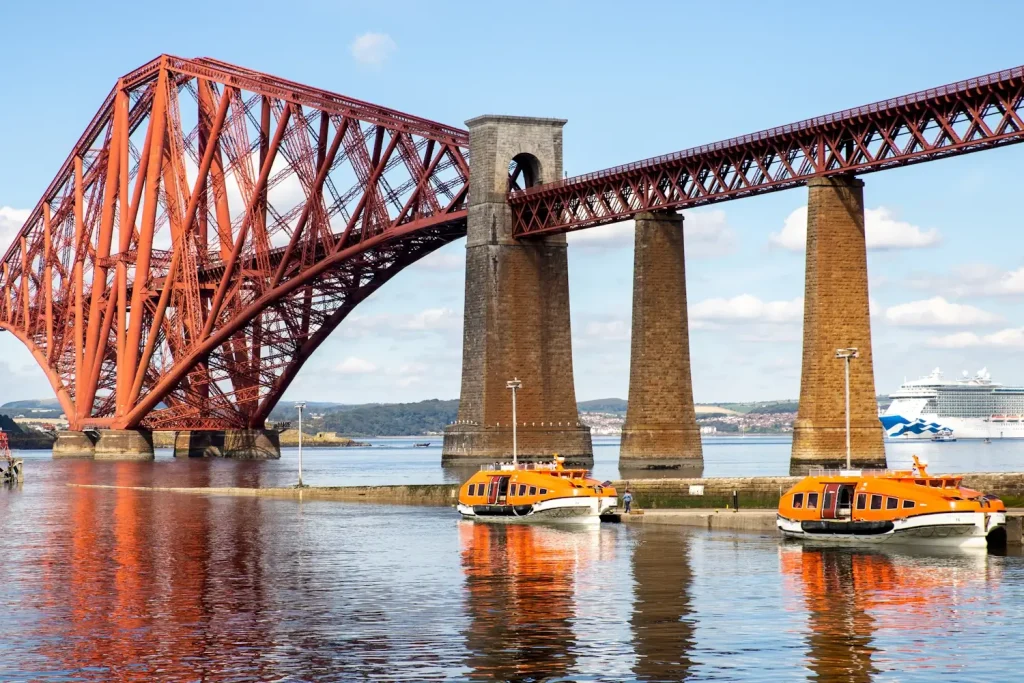
At the pier’s exit, look for the yellow sign: tour buses to the right, shuttle buses to the left. If you’ve booked a private tour, just follow the arrow and turn right. You’ll also find a group of volunteers, organised by the Queensferry & District Community Council. They want to ensure you find your way to tour buses, taxis, or the X99 Cruiselink to Edinburgh.
Don’t forget to get a photo with the local piper who welcomes cruise passengers ashore.
Commenters on Cruise Critic are right about one thing: weather conditions can make the tendering process at South Queensferry a bumpy ride. So be prepared!
Once you understand how tendering works at South Queensferry, the next question is how to spend the day itself. Whether it makes sense to head into Edinburgh or stay local depends on how much usable time you actually have ashore — something I cover in detail in this cruise day comparison of Queensferry vs Edinburgh.
Although Hawes Pier is often assumed to be the town’s original landing point, ferry crossings at the Binks Car Park predate it by centuries, operating from earlier shoreline access rather than a medieval pier.
Time on Shore — How to Plan It Smart
The daily programme lists your first and last tender times – they’re worth taking seriously. Always aim to be back on the pier a good hour before the final run. The sea doesn’t keep to a schedule, and neither does the queue when the weather turns.
A few regulars on Cruise Critic said they skip the first boats to dodge the crush at guest services. It’s sound advice. However, you probably have priority tendering if you’ve booked a Scotland cruise line shore excursion.
Once things get going, tenders run every twenty minutes or so, with the crew juggling dock time and the changing tide. Keep an eye on the clock and the water—that’s the trick to making the most of your time ashore.
Many cruisers to Edinburgh take the X99 Cruise Link direct to city centre for a cost-effective way to spend a day in Scotland’s capital.
Want to discover more options on travelling from South Queensferry? Check out my ultimate guide on getting from South Queensferry to Edinburgh on a cruise day.
Ship Tours vs Going It Alone
If you’ve booked a ship tour, cruise lines guarantee you’ll make it back before the last tender – simple as that. Independent travellers don’t get the same safety net, so plan to return an hour early and keep an eye on the weather. The conditions in the Firth of Forth can turn quickly.
Regulars on Cruise Critic reckon both choices work if you know your limits.
- Cruise line-sponsored shore excursions are easier to plan and guarantee timely arrival back at Queensferry cruise port.
- DIY tours give more freedom but require better planning to ensure you make it back to the last tender in time.
Either way, timing’s the difference between a calm return and a panic at the pier.
Ship Tours – Pros and Cons
- Pros: Crew manage the timing; priority tendering gets you ashore first; the tour organiser handles the logistics if the wind or tide shift.
- Cons: You move with a crowd, and the pace rarely fits your own. Costs more, too.
Independent Exploration – Pros and Cons
- Pros: You set the route and the rhythm. Fewer people, more space to see the town on your terms.
- Cons: No safety net if the schedule slips – you’re responsible for your own dock time and tender back.
Several Outlander filming locations, including Lallybroch (Midhope Castle), the Duke of Sandringham’s Estate (Hopetoun House), and (Blackness Castle) Fort William, are just minutes from the cruise terminal — see the full guide.
Bad Weather & Cancelled Tenders — What Really Happens
When the wind rises, the call’s out of your hands. The captain and harbour master decide if the tender boats can run – safety rules that leave no room for debate. One strong gust through the Firth of Forth can shut the whole operation down within minutes.
Posts on the forum Cruise Conversations tell the same story: passengers waiting, coffee in hand, for guest services to update the schedule. Sometimes the weather clears and tendering resumes; other times the port stop disappears from the Scotland cruise itinerary altogether. Refunds follow, but the disappointment of arriving in Queensferry and things not working out sticks.
It’s rare for a full cancellation at South Queensferry, though. The crew and local pilots know the limits. When the waves start slapping against the hull, they’ll hold the line until it’s safe, then restart the tendering process without fuss – just another day’s work on the Forth.
Accessibility & Family Tips
Safety is first and foremost during the tender process. The crew assists anyone with mobility issues, helping passengers on and off the tender boat as they bob against the hull. Mention to Guest Services the night before disembarking at South Queensferry to ensure you get the necessary assistance.

Travelling with children? It’s best to hold back until the first rush passes. Late-morning boats tend to have room for buggies and a calmer boarding queue. One parent on Cruise Critic said the “crew were patient even when the toddler wasn’t,” and that about sums it up. The process moves at a human pace – measured, helpful, and built for safety first.
What to Bring on Tender Days (Quick Guidance)
Pack light for tender ports. Weather conditions can shift quickly, and space on the tender boat is limited. These essentials keep you comfortable and safe between the cruise ship and shore.
You’ll need your cruise card and ID close to hand. Guest services check them before every boarding, so don’t bury them at the bottom of a bag. A small waterproof pouch is useful here—tenders sit low, and spray is common on the Forth.
Dress for exposure, not the calendar. Even on bright days, wind off the water can bite. A light jacket goes further than you think. Bring water and a small snack too—tender queues and return waits can stretch longer than planned.
If you’re sensitive to motion, it’s worth having tablets within reach. The crossing is usually short, but choppy conditions aren’t unusual. A phone or compact camera is enough for photos, and a small power bank helps—tenders don’t have sockets.
Carry any daily medication with you rather than leaving it onboard. Sunscreen and a cap can matter on clear days, especially if you’re standing on open decks. Think in terms of being ashore for an hour or two, not a full day.
Once you step off the tender at Hawes Pier, the decisions change quickly. See the South Queensferry Cruise Port Arrival Checklist for what to do first ashore.
A regular on Cruise Critic summed it neatly: “Pack like you’re gone an hour, not a day.” That’s the rule that keeps you balanced – and dry – on any tender port.
FAQs — South Queensferry Tender Port Made Simple
First time using a tender boat from a cruise ship? Here’s the straightforward version. How it runs, how long it takes, and what to do when weather conditions shift. Watch guest services for timings and keep a safe cushion before last tender.
How long does tendering usually take
Plan 30–45 minutes from first call to the pier. Once the tendering process settles, boats loop every 15–20 minutes. A regular on Cruise Critic said waiting for the second wave avoids the crush – sound advice on busy mornings.
Do ship tours get priority tendering?
They do. Ship excursions board first, alongside mobility assistance and top loyalty tiers. Independent travellers follow in timed groups. Collect tickets only after clearance – turning up early won’t move you forward.
Can I board with a wheelchair or stroller?
Some tender boats handle mobility issues better than others. Check with guest services the day before. Crew manage ramps and steps when the boat steadies – one hand for the rail keeps things simple.
What if the weather turns rough?
The captain and harbour master make the call. If the wind rises, tenders pause. Sometimes they restart; sometimes the port drops from the cruise itinerary. Refunds follow for ship-run tours; patience still required.
What happens if I miss the last tender?
On your own plan, there’s no safety net. Be back 60–90 minutes before final boats. Cruise Critic posts are blunt about this – miss it and you’re dealing with consequences, not sympathy.
Are tenders rough if I get sea sickness?
Sit centre, face forward, and keep movement in view. Short ride, steady breathing, and motion tablets if needed. One sensory tip – focus on engine vibration, not the horizon jumping.
Are there toilets on the tender boat?
Varies by vessel. Use facilities before you queue. At the pier, staff will point the way fast – no faff once you’re ashore.

Scott grew up in South Queensferry and knows the town like the back of his hand. He writes practical travel guides based on lived experience — tender days, cruise traffic, shortcuts into Edinburgh, local food spots, and the quirks only residents notice. His articles focus on clear directions, accurate timings, and grounded advice for visitors exploring Queensferry and the east of Scotland.