

This post may contain affiliate links. If you book through them, I may earn a small commission at no extra cost to you. I only recommend personally curated options that make sense for cruise passengers and independent travellers.
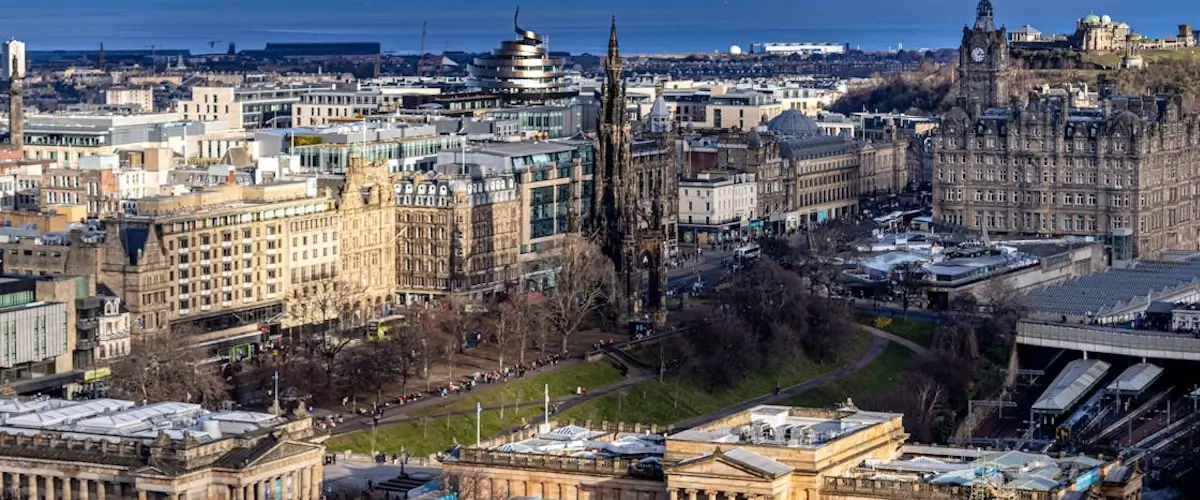
Edinburgh New Town is often called the city’s beating heart. That’s true. You’re in a unique place – 18th-century Georgian architecture and Princes Street Gardens with Castle Rock and the Royal Mile looming above. Look east, and you’ve got the Gothic Scott Monument in view with a Greek-style structure on Calton Hill.
Quick navigation
- Why Princes Street and New Town Confuse So Many Visitors
- Princes Street – Useful, Exposed, and Often Misread
- Old Town vs New Town – How to Choose
- New Town Explained – A Grid Built for Function, Not Drama
- Rose Street – Food, Pubs, and Short, Efficient Stops
- George Street – Space, Scale, and Slower Decisions
- Queen Street – Where Most Short Visits Naturally End
- St James Quarter – One Area That Solves Several Problems
- The Vertical Streets – How Most People Move Through the New Town
- Architecture Worth Noticing – A Short Walk Through Edinburgh’s West End
- If You’re Visiting Edinburgh on a Cruise Day
- How to Choose What Fits Your Day
- The Honest Takeaway on New Town and Princes Street
But here’s the problem with the New Town in Edinburgh – it’s a magnet for tourists. Trams stop here from Edinburgh Airport and Newhaven Port. Lothian CruiseLink buses here arrive from South Queensferry. Add the summer tourist season, the Edinburgh International Festival, and Christmas markets – you’ve got a recipe for chaos.
If you’re deciding whether Edinburgh New Town is worth visiting, the answer depends on what you want from your time in the city.
That’s why this guide to the New Town exists. Yes, you’ll discover what’s to see. But that’s not the point. This is about using the area without getting bogged down by it – moving through Princes Street, Rose Street, George Street, and Princes Street Gardens. With limited time in the city, you want to use it wisely.
Is it Worth Visiting Edinburgh New Town?
Yes—Edinburgh New Town is worth visiting if you enjoy wide streets, elegant Georgian architecture, and a calmer atmosphere than the Old Town. It’s less about ticking off landmarks and more about space, views, and refined city planning.
However, if you’re short on time, many visitors find the Old Town more rewarding. New Town works best as an extension, not a replacement.
What Edinburgh New Town Actually Is
Edinburgh New Town is an 18th-century planned district built to expand the city beyond the crowded Old Town. It’s known for its grid layout, grand terraces, and neoclassical design, now part of a UNESCO World Heritage Site.
The area includes streets like George Street and Queen Street, with Princes Street forming its southern edge alongside the gardens.
Attractions in Edinburgh New Town: Worth It or Skip It?
| Attraction | Worth It? | Quick Take |
|---|---|---|
| Princes Street Gardens | Best castle views without the climb. Easy, central, worth it. Green space. | |
| Scott Monument | Top-tier views—but narrow steps and not for everyone. | |
| Calton Hill | Fast payoff. Big views in minutes. One of the best stops. | |
| National Gallery | Free, central, and easy to dip into without losing time. | |
| George Street | Smart and polished—but mostly shops and restaurants. | |
| Queen Street | Quieter, more local feel. Not much to do and see. | |
| Princes Street | Busy, retail-heavy. Most people pass through, not explore. |
What Most Visitors Get Wrong
Most visitors treat Edinburgh New Town like a checklist—walk Princes Street, maybe glance at a square, then move on. That’s where it falls flat. New Town isn’t built for quick hits. It’s about space, symmetry, and how the city opens up after the Old Town’s tight streets.
Another common miss? Expecting landmarks. You won’t find castle-level sights on every corner. What you get instead is atmosphere—broad streets, clean lines, and some of the best viewpoints across to the Old Town. Miss that, and it feels underwhelming.
And then there’s Princes Street. Many assume it is New Town. It’s not. It’s the edge—and often the weakest part. Busy, retail-heavy, and easy to mistake for the main attraction.
The smart move is to shift your mindset. Don’t rush it. Don’t expect spectacle at every turn. Use New Town as contrast—step out of the crowds, take in the views, and pick your spots. That’s when it starts to make sense.
Why Edinburgh’s New Town Confuses So Many Visitors
You arrive in the New Town on its main thoroughfare – Princes Street for the first time – it’s a sight like no other. Edinburgh Castle and the Old Town tower above open green spaces. Buildings in front of you in a neoclassical style – the New Town feels open, orderly, and built for purpose.
That’s the thing – it was built for purpose, not pressure. This is where trams stop, buses arrive, and festival crowds stack on top of everyday foot traffic, which is busy at the best of times. Movement slows, crossing clogs, and small decisions start costing time and effort.
It’s not that there’s too much to see – it’s that everything competes for your attention at once. Without a plan, you’ll be wandering the streets of Scotland’s capital, covering ground and wondering how an hour disappeared so fast.
Princes Street – Useful, Exposed, and Often Misread

No visitor comes to Edinburgh and doesn’t visit Princes Street. All major transport connections converge here – Waverley Station, airport trams, Lothian buses. It’s also a central place to get to the visitor attractions in the city centre.
The reality is that if you know what it’s good for, it can make your day easier. If you don’t, it quietly wears you down.
What Princes Street Actually Does Well
Green space
Princes Street Gardens give you open ground right in the middle of the city. It’s a useful pause between Edinburgh Old Town and New Town – somewhere to stop, take stock, enjoy a snack, and let the noise drop briefly.
City hub
If you want to understand how Edinburgh connects, this is where it shows. Everything looks close from here, which helps with orientation, even if it can distort how long things actually take.
Shops and fast food
It’s chain-heavy, but that has its uses. Quick food, predictable coffee, no decisions. This is where people refuel, not linger.
Views
The castle, Old Town skyline, monuments, Arthur’s Seat, and gardens all line up along this stretch. Princes Street gives you Edinburgh’s big views in one glance – open, exposed, and hard to ignore.
Visitor attractions
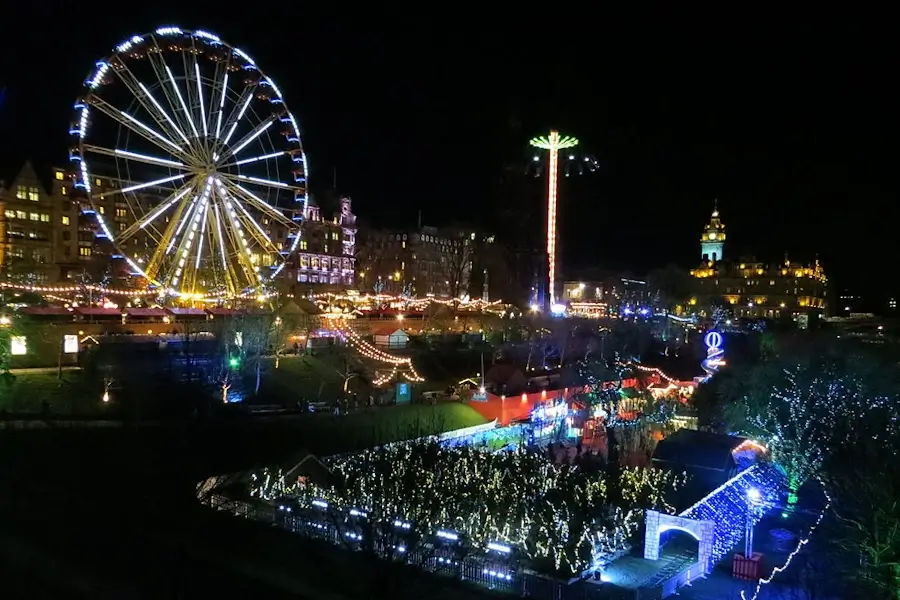
Princes Street can be a destination itself. Here you have the Scottish National Gallery, the Scott Monument, and the Johnnie Walker Experience. If you want, you can have fancy afternoon tea in The Balmoral Hotel or visit Christmas markets in December.
Fun fact: Author J.K. Rowling completed writing her final book Harry Potter and the Deathly Hallows in Room 552 at the Balmoral Hotel.
If you plan on taking in some of the art galleries during your day, I’ve compiled a guide to which galleries and museums in Edinburgh to visit if you’re staying in the New Town.
Why Princes Street Feels Chaotic in Summer and at Christmas
Tourists all year long, visitors to the Edinburgh Festival Fringe, and Christmas visitors mean crowds surge. Add in passengers from cruise ships to Edinburgh, and city centre is even more packed.
When Princes Street Is Worth Your Time
If you’re arriving, changing direction, grabbing food fast, or taking in the views, it works. It’s good for short stops, clear bearings, and quick decisions. Used briefly, Princes Street does its job and gets you where you need to be.
When the sun is shining and the weather is warm, Princes Street Gardens is the perfect spot to relax and enjoy a takeaway lunch.
If it’s raining in Edinburgh, head for the Scottish National Gallery to get shelter, admire some of the best art displays in the United Kingdom, and get immersed in Scottish heritage. All the artwork is divided into sections and is easy to follow.
When It’s the Wrong Place to Linger
Princes Street is hardest work around lunchtime and late afternoon, when tour groups, shoppers, and commuters overlap. If you want to enjoy it, come earlier in the morning, before the pressure builds. Later in the day, it’s better used as a route through, not a place to stop.
New Town Explained – A Grid Built for Function, Not Drama
First impressions of Edinburgh’s New Town are of Georgian mansions set out along straight streets, meticulously planned. Looking at the area on a map, the layout is clear. A park at either end of the main streets – St Andrew Square and Charlotte Square – and streets intersecting at right angles at predictable distances.
The contrast with the Old Town couldn’t be starker. There, you’ve got tenement buildings – some 14 stories high – narrow closes, cobbled streets, and a distinct 16th-century feel.
What “New Town” Really Means on the Ground
On the ground, New Town means wider pavements, clearer routes, and fewer surprises. You’re less likely to hit dead ends, steep climbs, or sudden bottlenecks. It’s easier to keep moving, easier to pause, and easier to know where you are without checking a map every five minutes.
Why New Town Often Works Better After Old Town
Think of New Town as your arrival and departure point. Most visitors – and cruise passengers especially – put their energy into the Old Town and the Royal Mile first. That’s where the climbs, crowds, and history are, and it makes sense to tackle it while your legs and attention are fresh.
After that, New Town is where you recover. Flat streets, parks, galleries, and food without effort. Somewhere to sit, eat, regroup, and decide what’s next – or just slow the pace before heading back out of the city centre.
Rose Street – Food, Pubs, and Short, Efficient Stops
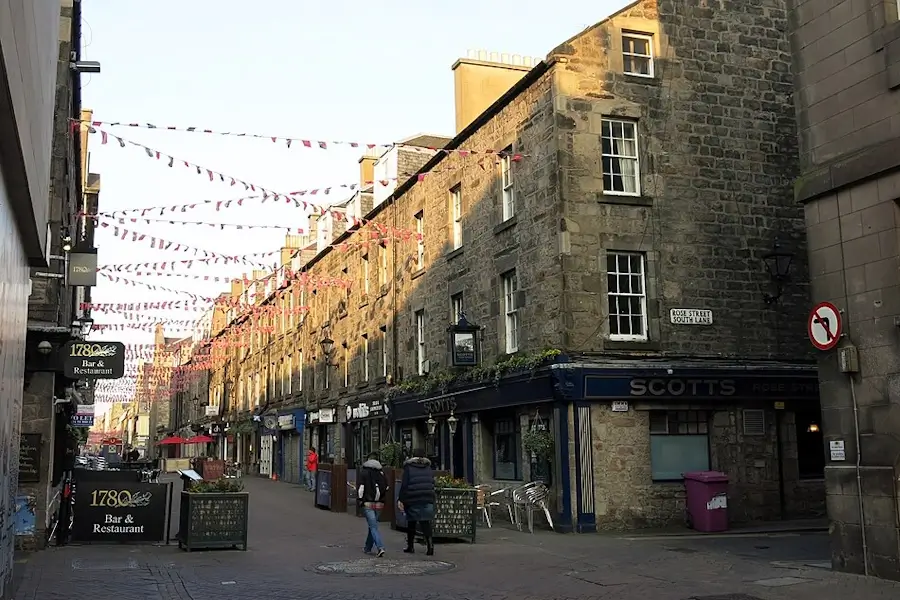
Rose Street runs parallel to Princes Street, one block back. It’s narrower, enclosed, and immediately quieter because it’s car-free. No sightlines pulling you in different directions, apart when you cross at the junctions at Hanover, Frederick, and Castle Streets.
You notice the change in vibe immediately.
This is where people stop to eat, grab a pint, or pause without committing time. It works well between plans or after Old Town. At peak hours, it fills fast, but for quick decisions and easy exits, it does its job.
Why Rose Street Works Between Plans
Rose Street is easy to dip into and just as easy to leave. It’s close enough to Princes Street to feel convenient, but enclosed enough to block the noise. If you need food, a drink, or a pause without derailing the day, it fits neatly.
When Rose Street Becomes Too Busy to Bother
At lunchtime and early evening, especially in summer, it can feel cramped fast. Tables fill, movement slows, and quick stops turn into waits. When that happens, it’s usually better to keep moving and come back later, or head to George Street.
George Street – Space, Scale, and Slower Decisions
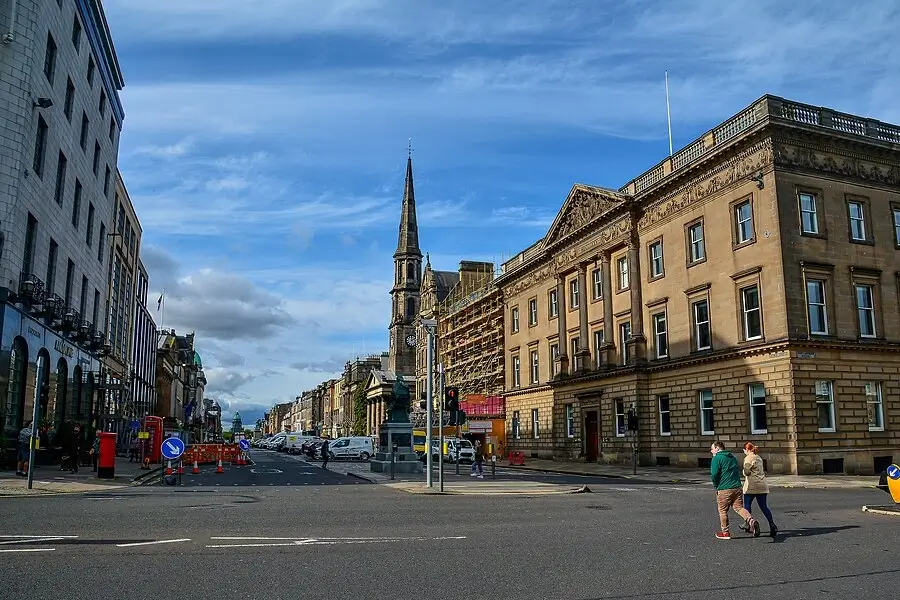
George Street runs parallel to Princes Street, one block north of Rose Street. It’s wider and more formal, with long sightlines and evenly spaced buildings. The scale is deliberate, giving the street a calmer feel and more breathing room than the streets around it.
This is where people intentionally slow down. It suits sit-down meals, quiet browsing, and anyone who prefers space over speed. It works best if you have time and budget to spare; less so if you’re looking for something quick.
What George Street Is Built For
George Street is built for architecture watching and sit-down dining. It suits longer meals, upmarket restaurants, and people who want space to slow down. If you’re looking for museums, quick stops, or things to tick off, this street won’t add much.
Who George Street Suits (And Who It Doesn’t)
George Street is quieter than Princes Street and ideal if you enjoy window shopping, taking shots of Georgian townhouses, or looking for a meal or cocktail bar. The junction at Castle Street is a great photo op to capture Edinburgh Castle framed by 18th-century townhouses.
Queen Street – Where Most Short Visits Naturally End
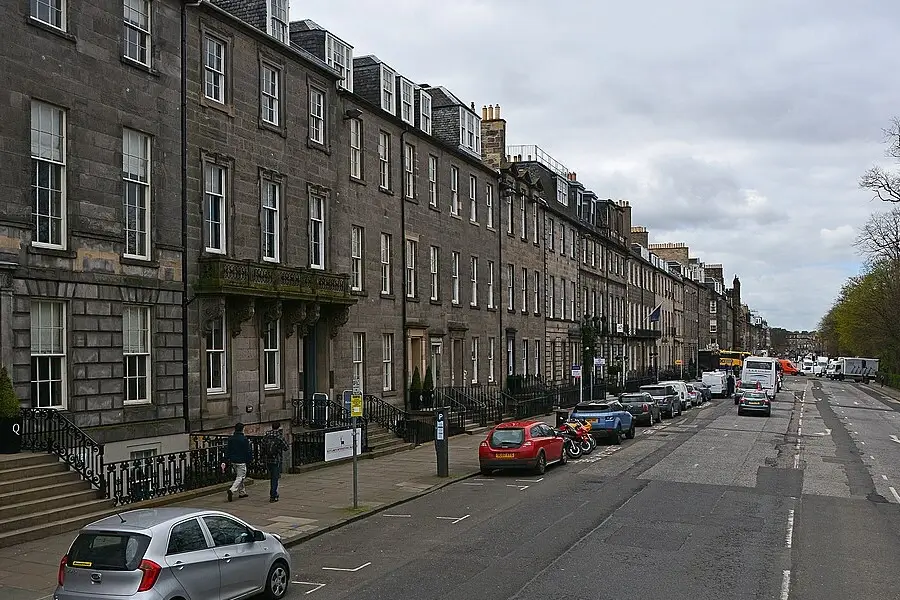
Queen Street runs parallel to George Street, marking the quieter edge of the New Town. For most visitors, this is where the city naturally tapers off. Beyond it, things spread out quickly and returns drop just as fast.
What You’ll Find at Queen Street
The main draw here is the Scottish National Portrait Gallery at the street’s east end. Aside from that, there’s little reason to linger. The green space opposite isn’t public parkland – it’s private gardens – so there’s no real payoff for casual wandering.
No Real Reason to Go Further North on a Short Visit
For short visits, there’s no practical reason to walk Queen Street. It’s also constantly busy during the day as it is the main thoroughfare for public transport and vehicles. It’s better to keep your focus elsewhere in the city.
St James Quarter – One Area That Solves Several Problems
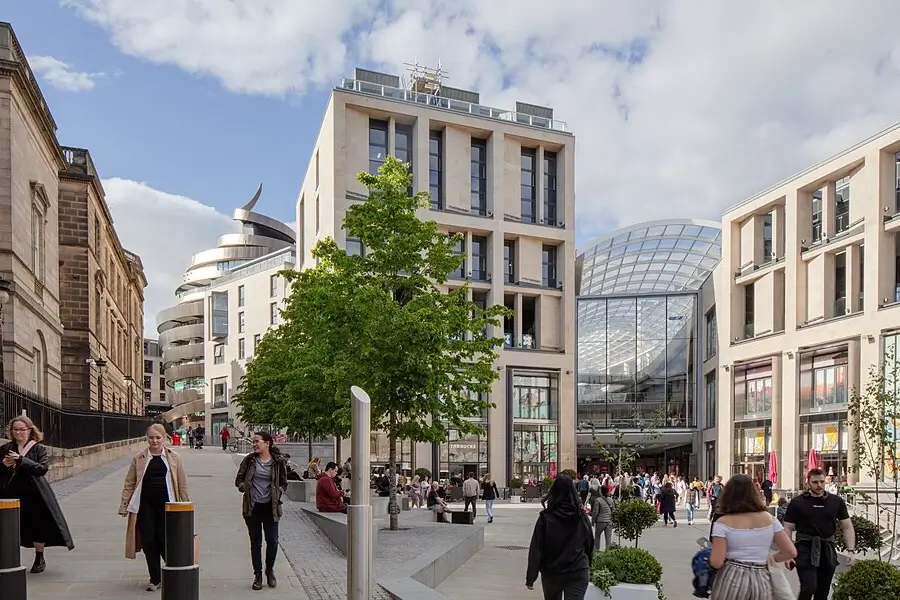
St James Quarter sits at the east end of Princes Street and feels different the moment you step inside. It’s big, bright, and busy, with around 30 places to eat, dozens of shops, a cinema, and the W Hotel rising above it. You can’t miss it.
What matters is convenience. If you’re hungry but can’t agree on food, this solves it. If you need toilets, somewhere to sit, or a break from weather and crowds, it’s all here. No wandering. No guessing. You walk in and pick.
People often use it without planning to. You duck in for lunch, end up resting your feet, checking the map, charging phones, or waiting for someone. Then you walk straight back out onto Princes Street or toward Leith Walk, ready to move on.
When St James Quarter Is a Smart Choice
It’s a good call when you’re hungry, tired, or undecided. If the weather’s turned, legs are fading, or no one can agree where to eat, this is an easy fix. You can sort food, toilets, and a short rest without burning more time.
When It Adds Nothing to Your Day
If you’re looking for atmosphere, history, or quiet, this isn’t the place. It’s busy, modern, and self-contained. Once you’ve eaten, rested, or regrouped, there’s no real reason to hang around when Edinburgh’s older streets are right outside.
Cruise-day reality
For cruise visitors to Scotland, Edinburgh, St James Quarter is totally practical. The X99 from South Queensferry and trams from Newhaven Harbour stop nearby, so it works as a first stop or a last one. People often use it to get their bearings, grab lunch, then decide whether to head uphill or stay level.
The Vertical Streets – How Most People Move Through the New Town
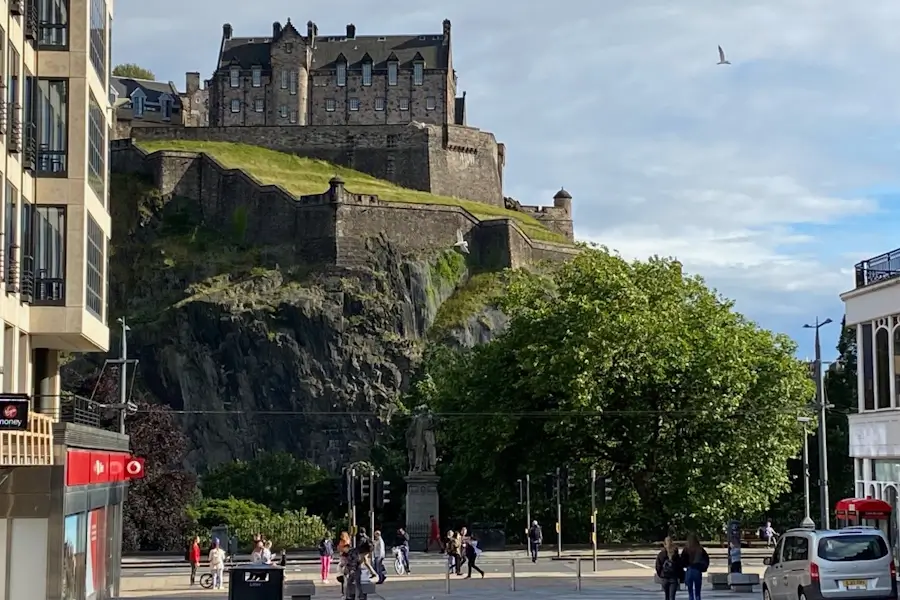
Castle Street, Frederick Street, and Hanover Street run north–south, cutting between Princes Street and George Street. These streets feel busy because people are deciding, not sightseeing—crossing over, changing direction, or ducking into the first obvious option. They’re useful when you need to reorient or move quickly, less so if you’re hoping to slow down or explore.
Castle Street
- Direct sightline to Edinburgh Castle
- Pedestrian zone between Rose Street and Princes St
- TGI Fridays midway up
- Starbucks on the Princes Street corner
- Dr Thomas Chalmers statue at the top
- Feels open, but fills quickly in summer
Frederick Street
- Mix of shops, cafés, and offices
- Less visual drama, more everyday city feel
- William Pitt the Younger Statue at the top
Hanover Street
- Direct sightline to the Royal Scottish Academy of Art and Architecture and New College
- One of the busiest crossings between Princes Street and George Street
- Heavy foot traffic most of the day
- Statue of King George IV at the top
- Useful for moving, not for pausing
Architecture Worth Noticing – A Short Walk Through Edinburgh’s West End
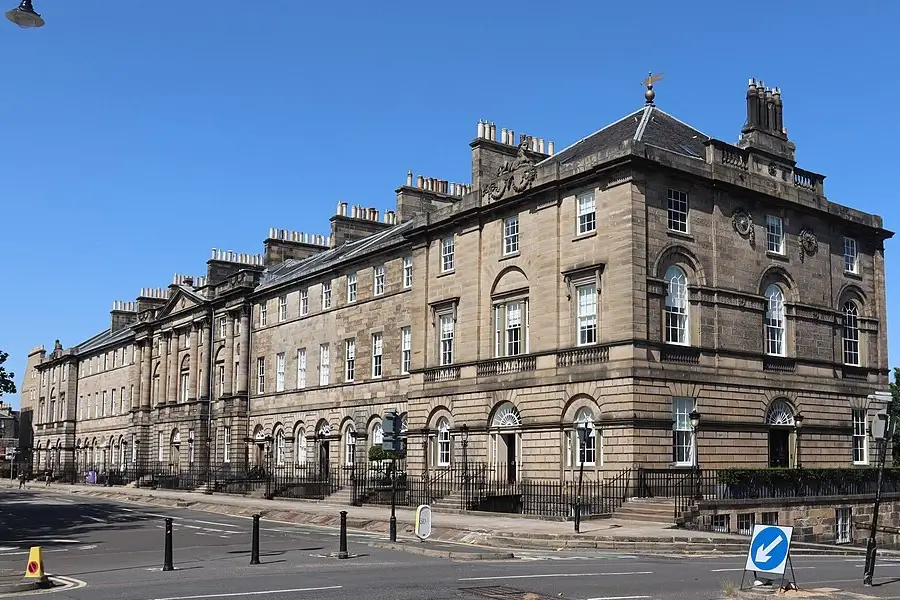
Charlotte Square
Charlotte Square has some of the best examples of Georgian Architecture. The highlight is Bute House – home to Scotland’s First Minister. Notice the pediment in the middle of the row. Opposite is the Albert Memorial, visible inside private gardens. West Register House is an impressive building with four columns at its entrance.
Walk down the lane to the right of West Register House to the next stop.
Randolph Lane and Edinburgh Mews
Randolph Lane immediately feels different. Stone gives way to cobbles, traffic drops off, and the buildings sit closer together. This isn’t showpiece architecture—it’s a functional backstreet New Town road.
To the right are Edinburgh Mews. This is where servants’ quarters and stables once sat. Today it feels lived-in and quietly residential, not designed for visitors.
On the corner is a Tudor-style structure with timber framing, overhanging upper floors, and leaded windows—completely different from the Georgian stone around it.
Continue down Randolph Place and cross Queensferry Street to Melville Street.
Melville Street
Melville Street is wide, straight, and deliberately imposing. The buildings are set back and create one of the best examples of an 18th-century New Town Street. A statue to Robert Viscount Melville stands in the middle of the street
At the statue, turn left onto Walker Street. It’s not as impressive as Melivlle Street, but our next destination is William Street.
William Street
Turn right onto William Street, and suddenly everything feels more enclosed. Shopfronts, signage, and varied façades break up the stone uniformity. It’s often used as a Victorian or 19th-century stand-in for film and TV, thanks to its scale and mixed detailing. Busier, noisier, and more textured than the streets around it.
Follow William Street west toward Manor Place.
Manor Place
Manor Place opens the space back up again with 2-story Georgian townhouses. The road isn’t the grandest in the New Town, but gives a feel of residential life. This stretch acts as a transition—less about stopping, more about moving through toward the edge of the West End.
Continue east toward Shandwick Place.
Shandwick Place – Back to Princes Street
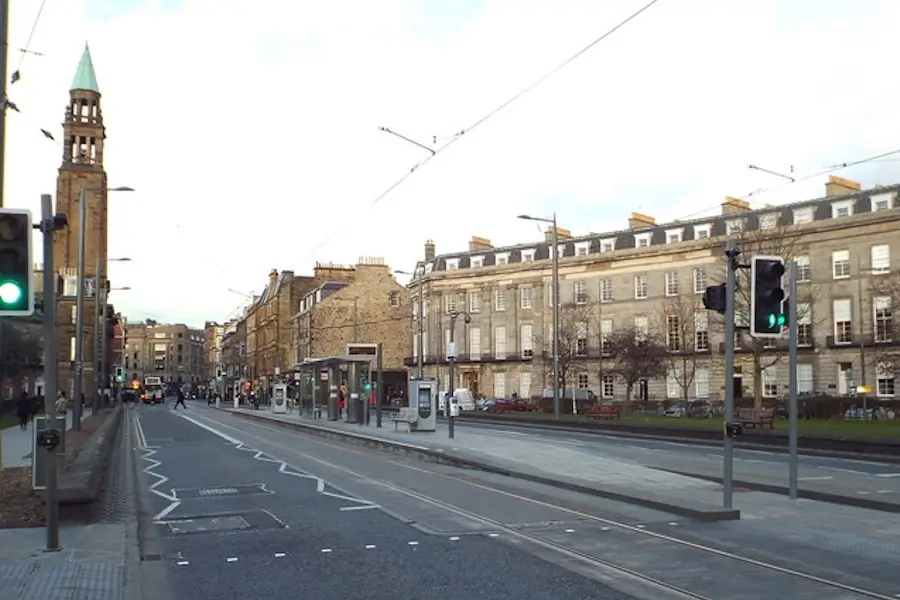
Shandwick Place pulls you back into noisy traffic. Buses, trams, and cars all pass through. The highlight is Athol Gardens – the oval green space split by Shandwick Place. Here you have the chance to admire sweeping rows of Georgian buildings.
From here, it’s a short walk back to Princes Street at the junction with Lothian Road, where the pace changes again and the wider city reasserts itself.
Old Town vs New Town – How to Choose

Old Town is dense, steep, and story-driven. New Town is flatter, calmer, and easier to read. If you want atmosphere and history, head uphill. If you want breathing space and simpler movement, stay level. Many visitors do both—but starting in the right place sets the tone for the day.
Many visitors pair New Town and Princes Street with visitor attractions in the Old Town – Holyrood Palace, St Giles’ Cathedral, and Edinburgh Castle.
This guide focuses on the New Town side of that split – helping you decide when to stay level, when to head uphill, and how to avoid wasting time between areas.
If you’re leaning toward Old Town, this self-guided Old Town walking tour shows how to tackle it properly—where to start, what’s worth stopping for, and how to avoid burning energy on steep climbs and crowded stretches. Outlander fans are also drawn to the Royal Mile to see locations used in filming.
Just remember that getting to the Royal Mile involves a steep climb that often catches people out. If you’re surprised by how tired you feel already, this guide on tired of walking in Edinburgh explains why effort builds faster here than maps suggest — and how to stop fatigue from dictating the rest of your plans.
If You’re Visiting Edinburgh on a Cruise Day
Cruise days change how this part of Edinburgh works. You’re arriving on a schedule, usually via South Queensferry or Newhaven, and delays add up fast. Princes Street and the New Town can either help you manage time—or cost you more of it than you expect.
If you’re deciding whether to split your day between Edinburgh and South Queensferry, this cruise-day choice guide explains when that works and when it doesn’t, based on travel time and walking effort rather than wishful planning.
For getting into the city, the Queensferry to Edinburgh transport guide sets out the realistic options and timings. And if you’re unsure where your ship docks, this overview of Edinburgh cruise ports clears that up before you commit to a plan.
Used well, New Town gives you somewhere flat and practical to eat, regroup, and change direction during a cruise day, instead of standing still on Princes Street trying to decide what to do next.
How to Choose What Fits Your Day
Are you one of those visitors to the Scottish Capital who has a tight schedule to take in the sights? Or maybe you want to see the best of the New Town in the morning or the afternoon.
You’ve got plenty of options, but not enough clarity. Get this wrong and you’ll feel rushed without knowing why—get it right and the day suddenly works.
If You Have 60–90 Minutes
Keep it tight. Start at the east end of Princes Street and drop into Princes Street Gardens. Castle photos come easy from here, with minimal walking and clear exits. It’s a contained win that doesn’t pull you into decisions you don’t have time for.
If You Have Half a Day
Pick one anchor and build around it.
- Calton Hill in Edinburgh works well, then lunch at St James Quarter.
- Stay central with the National Gallery and Scott Monument, eating in the gallery café or gardens.
- If you’re up for some walking, use the New Town walking loop toward Charlotte Square.
- You could also take the tram to the West End of Princes Street and walk to Dean Village. You’ll see 16th-century buildings and enjoy woodland walks along the Water of Leith.
If You’re Already Tired or the Weather Turns
The National Gallery is the no-brainer choice when it’s raining in Edinburgh. Here you can find shelter, seating, toilets, a café, learn about Scottish culture, and do something worthwhile to see without further walking. It’s one of the easiest resets in the city when energy drops or weather closes in.
If You Need a Smooth Exit Back to Transport
Buy a day pass and use the trams. They’re cheap, predictable, and avoid street-level delays. Trams run back to Newhaven, or hop off at St Andrew Square for the X99 to South Queensferry. Minimal thinking. Reliable timing.
The Honest Takeaway on New Town and Princes Street
New Town and Princes Street aren’t places you conquer — they’re places you manage. Used well, they steady your day, give you space to reset, and keep plans simple. Used badly, they drain time and patience. Treat this area as a tool, not a destination, and Edinburgh starts working with you, not against you.
Picture: Princes Street Christmas alljengi, CC BY-SA 2.0 via Wikimedia Commons.
Picture: Edinburgh Tram Dr Neil Clifton, CC BY-SA 2.0 via Wikimedia Commons.
John Knox House: Mike McBey, CC BY-SA 2.0 via Wikimedia Commons.
Rose Street: Enric, CC BY-SA 4.0 via Wikimedia Commons.
George Street: Lewis Clarke, CC BY-SA 2.0 via Wikimedia Commons.
Queen Street: Lewis Clarke, CC BY-SA 2.0 via Wikimedia Commons.
St James Quarter: St James Quarter 2, CC BY-SA 4.0 via Wikimedia Commons.
Shandwick Place: Malc McDonald, CC BY-SA 2.0 via Wikimedia Commons.
Charlotte Square: Mike Shaw, CC BY-SA 4.0 via Wikimedia Commons.

Scott Gibson grew up in South Queensferry and runs queensferry.net. The Forth and Edinburgh guides come from lived experience — tender days at Hawes Pier, cruise traffic, the shortcuts into the city. For the wider Scotland cruise ports, he draws on friends in some of the port towns alongside port, operator and transport sources — so the detail holds up on the ground, not just on paper. Clear directions, real timings, no brochure fluff.