

This post may contain affiliate links. If you book through them, I may earn a small commission at no extra cost to you. I only recommend personally curated options that make sense for cruise passengers and independent travellers.
Your cruise itinerary says Edinburgh, but, the port of call is Rosyth Cruise Terminal. Here’s the thing: Rosyth isn’t Edinburgh. It sits on the north bank of the Firth of Forth in Fife – about 15 miles from the city centre, on the north side of three bridges.
That confusion has caught out plenty of passengers. Not because the day is difficult, but because they arrived expecting one kind of port and got another.
Rosyth is a docked berth: no tenders, no waiting in a small boat, no bouncing across an anchorage. The ship ties up alongside the North Wall, and you step directly off the gangway. The complication isn’t getting off the ship – it’s getting out of the port.
This guide covers what the terminal actually looks like, how the transport options work, and what’s genuinely worth doing – including the Fife options that most guides mention briefly before redirecting everyone to Edinburgh.
What Is Rosyth Cruise Terminal?
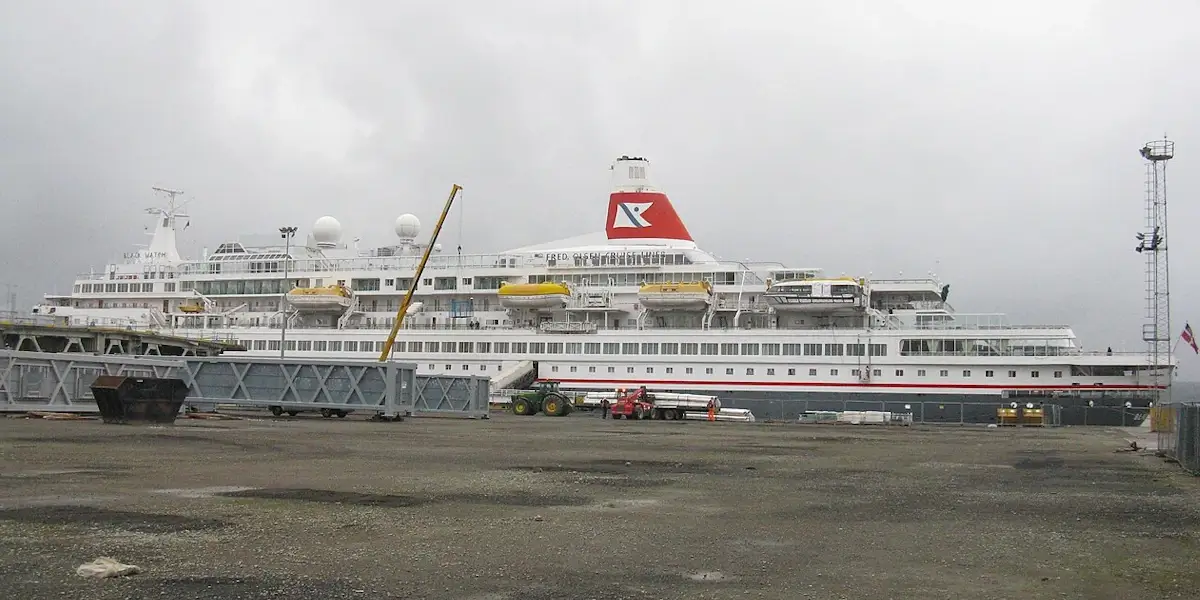
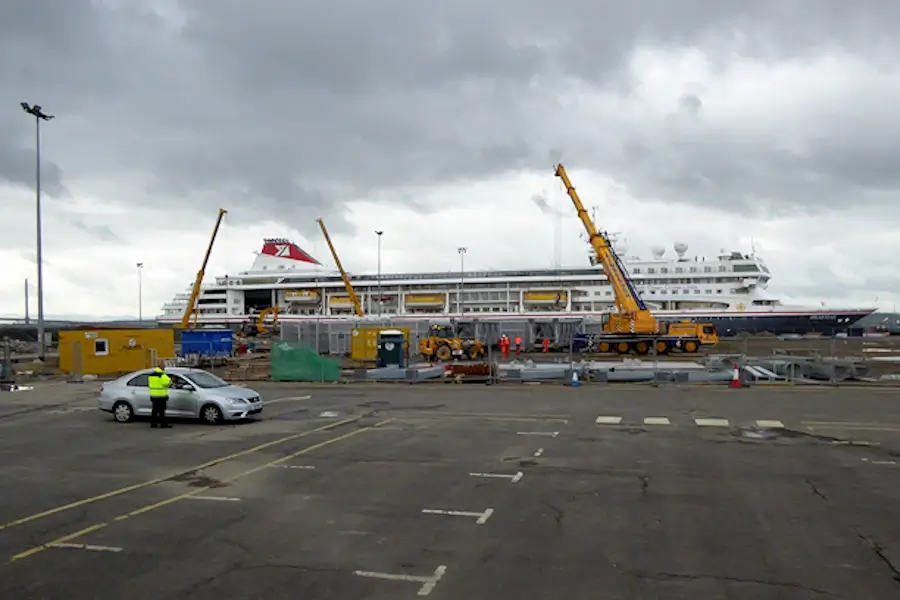
Rosyth Cruise Terminal is a deep-water docked berth inside a working commercial and naval dockyard on the north bank of the Firth of Forth. Rosyth is not the easiest Edinburgh cruise port to understand at first glance. That is exactly why it needs a plan.
Its postcode KY11 2XP if you’re navigating by road. The port is managed by Babcock International and looks exactly like what it is: an industrial facility that handles cruise ships as one part of a larger operation.
There are no shops at the berth. No gift stalls, no waterfront cafés, nothing commercial within walking distance of the gangway.
What’s there is a terminal building with seating for around 250 passengers, toilets, free Wi-Fi, a small café, and a visitor information desk staffed by local volunteers on transit call days.
The visitor desk matters more than it sounds. The volunteers usually know what is happening that morning – courtesy bus timings, taxi pressure, and whether the day is already starting to bunch up.
The main rule is simple: you cannot walk out of Rosyth cruise terminal. It is an active secure site, so every passenger needs some form of transport through the terminal gates. Keep your cruise card and photo ID with you. Security is part of the day, not an optional extra.
Arriving at Rosyth Cruise Terminal: What to Expect
Ships arrive at Rosyth between roughly 7:30 and 9 am, coming up the Firth of Forth from the east. If you’re on deck for it, this is one of the better sail-ins in UK waters.
The ship passes three bridges in sequence before it berths. Stand on the starboard side – right, when facing forward – and you’ll see them arrive in the correct order.
First comes the Forth Bridge. The 1890 Victorian cantilever railway bridge is unmistakable, and an iconic Scottish landmark with its dark red steel. On a clear morning, the structure fills the forward view and the rivets are visible. It’s a UNESCO World Heritage Site.
Next is the Forth Road Bridge – the 1964 suspension bridge, now just carrying buses and taxis. At one time, it was the longest suspension bridge in the world.
The newest addition to the Forth bridges is the Queensferry Crossing. Opened in 2017, the bridge is a cable-stayed span that sits clean and angular against the sky. Then the terminal berth sits around a mile west of it.
It takes about 20 minutes from first sighting to docking. The photographs taken from a moving ship alongside the Forth Bridge are better than anything you’ll get from the road, and you won’t see it from this angle at any other point in the cruise.
Get on deck before the cruise ship enters the Firth of Forth. You’ll spot Bass Rock, Inchcolm Island, and glimpses of central Edinburgh with the castle and Artur’s Seat visible from the water.
How to Get From Rosyth Cruise Terminal to Edinburgh and Beyond
Rosyth Cruise Terminal has no public road access on foot — every passenger needs a vehicle through the dockyard gates. The fastest independent route to Edinburgh is a taxi to Inverkeithing Station (10 minutes, ~£8–10) then ScotRail to Edinburgh Waverley (25–30 minutes, ~£7.30 day return). Door to door: 40–50 minutes, around £15–17 total. A direct taxi across the Queensferry Crossing costs £45–60 and takes the same time.
Here’s more detailed information:
Taxis are available at a dedicated rank at the terminal. A ride to Inverkeithing Station takes about 10 minutes and costs roughly £8 – £10 for up to four passengers. Local operators include L&A Taxis (07523 264953), SK Taxis (07484 128695), Treble 41 (01383 414141), and New City Taxis (07392 006786). For wheelchair-accessible hire, Access Taxis covers the area at 07388 118283.
Ship shuttles vary by cruise line. Check in advance whether yours drops at Inverkeithing Station – which is what you want for ScotRail trains into Edinburgh – or at the Ferrytoll Park & Ride, which is better positioned for buses. They point in different directions and the distance between them matters if you’re on foot. Official ScotRail timetables.
The courtesy bus runs on most transit call days – not on embarkation days when passengers are joining or leaving the ship at the start or end of a voyage. It leaves from the terminal building throughout the morning and runs to Dunfermline and North Queensferry.
Always double-check the arrival schedule. Many passengers say that times can change last minute and the published arrival time isn’t always accurate.
Use Inverkeithing Station, not Rosyth Station. Rosyth has its own station and it’s closer to the port. However, it’s easier to get a taxi to Inverkeithing station.
Rosyth Station sees local services only – slower trains, longer journey times. Inverkeithing is the main hub on this line: all ScotRail express services stop there, every 10 – 15 minutes, arriving at Edinburgh Waverley in 25 – 30 minutes. The day return fare is around £7.30.
Best transport options from Rosyth Cruise Terminal
| Destination | Best route from Rosyth | Approx. time | Approx. cost |
|---|---|---|---|
| Edinburgh Waverley | Taxi to Inverkeithing, then ScotRail to Edinburgh | 40 – 50 mins | About £15 – £17 total |
| Edinburgh by bus | Taxi to Ferrytoll, then X55 or JET 747 | 55 – 65 mins | About £10 – £12 total |
| Dunfermline | Free courtesy bus on most transit call days | About 15 mins | Free |
| North Queensferry | Free courtesy bus on most transit call days | About 15 mins | Free |
| Culross | Taxi from the terminal | About 20 mins | About £15 – £20 each way |
| Edinburgh by direct taxi | Taxi across the Queensferry Crossing | 40 – 50 mins | About £45 – £60 |
What to Book Before You Arrive
Rosyth’s transport gap makes pre-booked tours more useful here than at most Scottish ports — there’s no equivalent of the X99 waiting at the terminal. Look at Edinburgh tours with transport included and confirm the pickup covers Rosyth before booking.
Who Rosyth Suits
Rosyth works best for passengers happy to book a transfer in advance and treat the day as a plan, not a wander — you can’t walk off this pier into a town. If you’ve done Edinburgh before, or want fewer crowds, Dunfermline and Culross make the stronger day. If Edinburgh’s still the priority, book your onward transport before you sail, not after.
Dunfermline: Why Some Passengers Say It’s The Stronger Day

Most guides describe Dunfermline as the Edinburgh alternative – somewhere to go if the city feels too far, or if the train feels like too much. That framing undersells it considerably.
Dunfermline was granted city status in 2022. Before Edinburgh became Scotland’s capital, Dunfermline was the royal seat – the place where Scotland’s early kings governed and were buried. Robert the Bruce is buried in Dunfermline Abbey.
The Abbey Church, where Robert the Bruce lies, is free to enter. The nave and palace ruins cost £6.
Pittencrieff Park – a large, well-kept public park directly beside the Abbey – was donated to the town by Andrew Carnegie in 1903. The man who funded public libraries across the English-speaking world was born in a weaver’s cottage here; the birthplace museum is open and free.
The courtesy bus gets you there in 15 minutes from the terminal, at no cost. There are no queues. No coaches reversing down narrow streets. No all-aboard anxiety if the ScotRail signal fails at Dalmeny Junction.
If you have less than five hours in port, Dunfermline gives you more per hour than a compressed Edinburgh run. If you’ve been to Edinburgh before, it gives you something you haven’t seen.
It’s the straightforward recommendation for most transit callers at Rosyth, and the one most passengers wish they’d been given earlier.
Edinburgh: The Typical Choice From Rosyth Cruise Port

The train from Inverkeithing to Waverley drops you in the centre of the city, a short walk from the Royal Mile and the Castle. The route is straightforward and runs regularly enough that you don’t need to pre-book.
Edinburgh Castle costs £23.50 per adult online, £26.00 at the door. On summer cruise days it sells out. Pre-booking isn’t optional – tickets go weeks in advance, and walk-up entry on a busy call day often isn’t available by the time the first trains arrive. Book before you board the ship.
Time is the variable that changes everything here. The transit in each direction – taxi, train, station exit – takes 40 – 50 minutes door to door. A ship with six hours ashore gives you roughly four hours in the city if everything runs on time. That covers the Old Town properly, or the Castle and the Royal Mile. It doesn’t comfortably cover both with lunch between.
Leave Edinburgh no later than two hours before your all-aboard time to allow for the return train, the taxi from Inverkeithing to the terminal, and port security. The ship will not wait for independent passengers.
If you’ve already seen Edinburgh, or if your port time is under five hours, Fife is the more honest option.
This guide has more tips on Edinburgh shore excursions and how to spend you cruise day in the capital city if you only have limited time.
What to Book In Edinburgh to Skip the Queues
Booking ahead for a structured tour is simple and save your most important commodity on a cruise day: time. Someone else handles the routing and you stop losing time to wrong turns. Look at the one-day options and be honest about which kind of traveller you are.
Culross and the Fife Coast

Twenty minutes west of Rosyth along the Fife coast road, Culross is one of the most intact 17th-century villages in Scotland. The ochre-painted buildings, cobbled winding street, and the Culross Palace courtyard have appeared across multiple Outlander series as the fictional village of Cranesmuir. On a weekday in summer, it sees a fraction of the visitors that Edinburgh does.
Culross Palace is managed by the National Trust for Scotland; adult entry is £14. The village itself is free to walk, and the small harbour sits a short distance below the square.
Getting there requires a taxi – the courtesy bus doesn’t cover this route. Allow £15 – £20 each way and factor that into your timing. It works well combined with Dunfermline: courtesy bus out in the morning, a taxi west to Culross in the early afternoon, and back to the port with enough time to spare.
If You’re Departing or Arriving Here
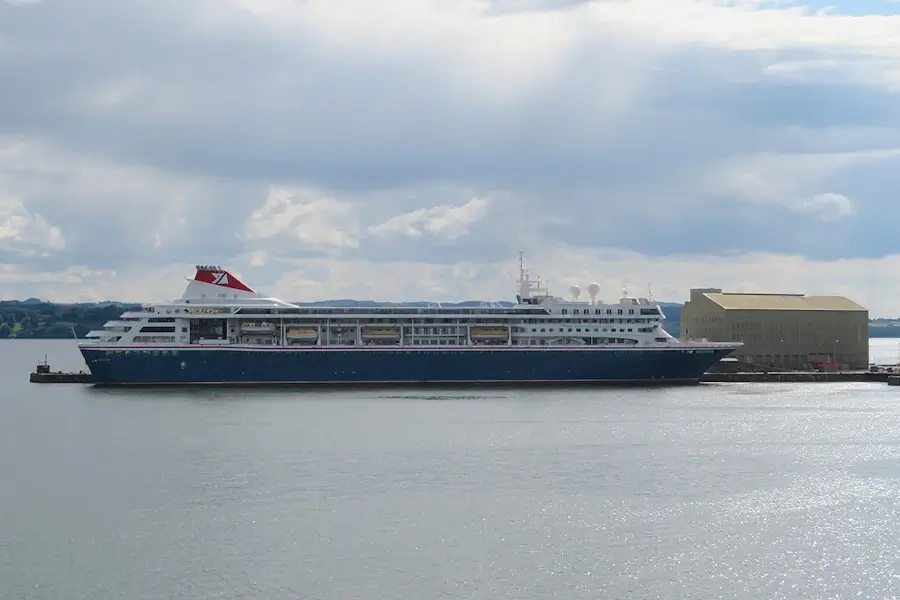
Rosyth is the main Scottish homeport for Fred. Olsen Cruise Lines. The Balmoral runs weekly summer departures from Rosyth – Norwegian Fjords, the Hebrides, the British Isles, and an Iceland sailing timed around the solar eclipse in August 2026.
If you’re on one of those itineraries, the logistics are different from a transit call.
Parking at the terminal is approximately £16 per night. Spaces are limited and fill up early for peak summer sailings – book through Fred Olsen when you make the cruise reservation, not afterwards. Off-site alternatives within three miles of the port run at around £2 – £3 per night; a return taxi to the terminal adds a small amount, and the net saving on a 10-night cruise is still significant.
Pre-cruise accommodation: Edinburgh is the city choice if you want a couple of days before departure. Hotels near Waverley are plentiful; Inverkeithing to the city is 25 minutes by train. Dunfermline is the practical choice – budget chain hotels 15 minutes from the port, lower rates, and a straightforward morning on embarkation day without navigating Edinburgh traffic.
Embarkation day: The terminal handles morning disembarkation and afternoon embarkation on the same day. Check-in typically opens in the early afternoon. The terminal building has seating, Wi-Fi, and the information desk.
Where Rosyth Fits in a Wider Scotland Cruise
Rosyth is not just an Edinburgh overspill port. It plays a different role in Scottish cruising: part embarkation point, part Forth transit stop, part launchpad for smaller-ship itineraries heading north, west, or across the North Sea.
That matters because passengers arriving here are often on a very different kind of cruise from the larger ships tendering at South Queensferry. Rosyth is more likely to appear on Scottish departures, British Isles sailings, Norwegian Fjords routes, Iceland cruises, Hebridean itineraries, and smaller-ship calls using the Forth as a practical east-coast gateway.
The port’s position explains the pattern. From Rosyth, ships can turn east into the North Sea for Norway, swing north towards Orkney and Shetland, or work round the Scottish coast towards the Hebrides. It is less postcard-pretty than South Queensferry, but it is useful. Ports often are.
For passengers, this changes how the call should be understood. Rosyth is not only about reaching Edinburgh. It may be the first or last Scottish impression on a longer cruise, or one piece in a chain of Scottish ports that could include Dundee, Aberdeen, Invergordon, Kirkwall, Lerwick, Stornoway, Greenock (Glasgow), or Leith.
If your cruise includes several Scottish stops, do not spend every port chasing the same version of Scotland. Rosyth gives you Fife and the Forth. Dundee gives you the East Coast and V&A Waterfront. Invergordon points towards Loch Ness and the Highlands. Kirkwall and Lerwick are island days altogether. Greenock is Glasgow, the Clyde, and the west coast scenery.
That is why Dunfermline, Culross, and the Fife coast deserve more attention here. Edinburgh is the obvious name on the itinerary, but Rosyth is one of the few Scottish cruise calls where the quieter local day may tell you more about where the ship actually docked.
Think of Rosyth as the Fife-side chapter in a Scotland cruise, not just a workaround for Edinburgh.
Planning more Scottish cruise ports? Rosyth works differently from South Queensferry cruise port, Leith, Dundee, Invergordon, Kirkwall, Lerwick, Greenock, and Stornoway. Each port gives you a different version of Scotland – city, island, Highland, Forth, Clyde, or coast.
Rosyth and South Queensferry: The Practical Difference
If your itinerary lists Edinburgh and you’re wondering how Rosyth differs from South Queensferry, here’s what matters on the day:
| What matters on the day | Rosyth | South Queensferry |
|---|---|---|
| Port type | Docked berth | Tender from anchorage |
| Location | North bank – Fife side | South bank – Edinburgh side |
| Can you walk into town? | No – the berth is inside a secure dockyard | Yes – tenders arrive at Hawes Pier, beside the town |
| Best route to Edinburgh | Taxi to Inverkeithing, then ScotRail | X99 CruiseLink bus first, Dalmeny train as a backup |
| Typical journey to Edinburgh | About 40 – 50 mins door to door | About 30 – 40 mins, depending on traffic and queues |
| Best local options | Dunfermline, Culross, North Queensferry, Fife coast | South Queensferry High Street, harbour, bridges, Inchcolm boats |
| Common cruise lines | Fred. Olsen, expedition ships, smaller luxury lines | Princess, NCL, Holland America, and other larger cruise lines |
South Queensferry puts you on the Edinburgh side of the Forth, in a working harbour town directly beneath the Forth Bridge, with the city 30 minutes away by bus. Rosyth puts you on the Fife side, farther from Edinburgh, but with the Dunfermline and Fife coast options closer than most passengers realise.
Rosyth Cruise Terminal: FAQs
Can I walk out of Rosyth cruise terminal on foot?
No. Rosyth cruise port sits inside an active dockyard, so passengers cannot walk from the berth to the public road. You need a taxi, ship shuttle, or courtesy bus. Keep your cruise card and photo ID with you for the security gate.
How do I get from Rosyth to Edinburgh?
The simplest independent route is taxi to Inverkeithing Station, then ScotRail to Edinburgh Waverley. Use Inverkeithing rather than Rosyth Station because it has faster and more frequent Edinburgh services. Build in time for the return taxi and port security before all-aboard.
Is there a free shuttle from Rosyth cruise terminal?
On most transit call days, a free courtesy bus runs from Rosyth cruise terminal to Dunfermline and North Queensferry. It usually does not operate on embarkation days. Check the latest timings at the visitor information desk when you arrive.
Should I use Rosyth Station or Inverkeithing Station?
Use Inverkeithing Station for Edinburgh. Rosyth Station looks closer on a map, but Inverkeithing has better train frequency and faster services to Edinburgh Waverley. From the cruise terminal, a taxi to Inverkeithing usually takes about 10 minutes.
Is Dunfermline worth visiting from Rosyth?
Yes. For many Rosyth cruise passengers, Dunfermline is the stronger day. It is close to the port, usually served by the courtesy bus, and has Dunfermline Abbey, Robert the Bruce history, Pittencrieff Park, and the Andrew Carnegie connection within a compact area.
How far is Rosyth from Edinburgh city centre?
Rosyth is roughly 15 miles from Edinburgh by road. By public transport, allow around 40 – 50 minutes door to door using a taxi to Inverkeithing Station and ScotRail to Edinburgh Waverley. A direct taxi usually costs much more.
Is Rosyth the same as South Queensferry?
No. Rosyth is a docked berth in Fife, north of the Firth of Forth. South Queensferry is a tender port on the Edinburgh side. Rosyth has easier disembarkation but no walk-out access. South Queensferry involves tendering, but passengers arrive directly into the town.
Can I visit Culross from Rosyth cruise port?
Yes, but you will usually need a taxi. Culross is around 20 minutes west of Rosyth by road and works well for passengers who want a quieter Fife day, especially Outlander fans. Build in return time because the courtesy bus normally does not cover Culross.
How much is parking at Rosyth cruise terminal?
On-site parking at Rosyth cruise terminal is limited and should be booked through your cruise line where available. Prices can vary, so check current rates before sailing. Off-site parking may be cheaper, but factor in taxi costs and embarkation-day timing.
Picture: Rosyth Cruise Port M J Richardson, CC BY-SA 2.0 via Wikimedia Commons.
Picture: Rosyth Cruise Port M J Richardson, CC BY-SA 2.0 via Wikimedia Commons.
Picture: Braemar Cruise Ship at RosythPort David Dixon, CC BY-SA 2.0 via Wikimedia Commons.
Picture: Dunfermline Abbey Paul McIllroy, CC BY-SA 2.0 via Wikimedia Commons.

Scott Gibson grew up in South Queensferry and runs queensferry.net. The Forth and Edinburgh guides come from lived experience — tender days at Hawes Pier, cruise traffic, the shortcuts into the city. For the wider Scotland cruise ports, he draws on friends in some of the port towns alongside port, operator and transport sources — so the detail holds up on the ground, not just on paper. Clear directions, real timings, no brochure fluff.