
This post may contain affiliate links. If you book through them, I may earn a small commission at no extra cost to you. I only recommend personally curated options that make sense for cruise passengers and independent travellers.
Dunfermline was a seat of Scottish kings and queens. That is why Dunfermline Abbey and Palace is worth the trip. The name promises an abbey and a palace. In practice there is an abbey, a church and a set of ruins, and which of them is open depends on the day.
Malcolm III and Margaret founded a church here in the 11th century. David I raised it to an abbey. Eight Scottish kings are buried here, Robert the Bruce among them. Charles I was born in its palace in 1600.
Two organisations look after the site, and their web pages don’t always agree. Neither is written for a visitor staying in Edinburgh, South Queensferry or elsewhere in Fife, and travelling without a car.
This guide sorts it out: what you can see, who is buried here, what is open, and how to get there by train or bus. It also covers what else is worth the trip in Dunfermline and where to eat.
Visitors from Queensferry get one extra thread. Queen Margaret, buried here, gave the town its name.
Status check, 17 October 2026: Historic Environment Scotland lists the palace ruins as closed for conservation works. The nave and Abbey Church are open to visitors.
In this guide
Key Takeaways
Dunfermline Abbey is free to enter, about 17 miles north of Edinburgh, and holds Robert the Bruce’s tomb. Trains from Edinburgh Waverley and Dalmeny run on the Fife Circle to Dunfermline City, half a mile away. Winter opening is Tuesday to Saturday. The palace ruins were closed at the time of checking.
- Two organisations run the site, so Bruce’s tomb follows the church’s hours, not the abbey’s.
- There are no visitor toilets or car park on site. The nearest toilets are at Dunfermline Carnegie Library.
- The station is now Dunfermline City. Older guides still call it Dunfermline Town.
- Allow one to two hours for the abbey alone, depending on your interest in architecture and Scottish history.
- Queensferry is named after St Margaret, the queen buried at Dunfermline Abbey.
What You Can See at Dunfermline Abbey and Palace
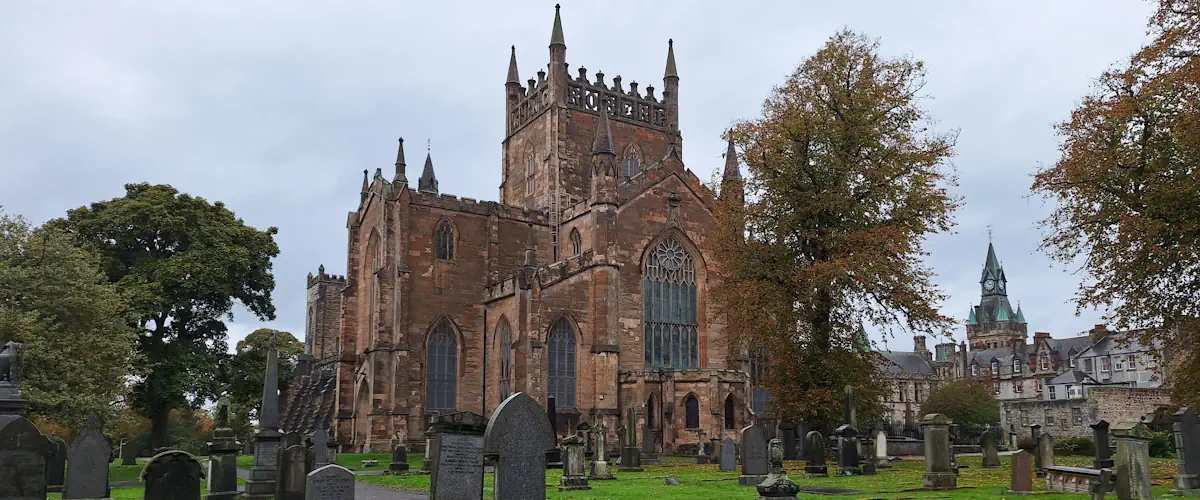
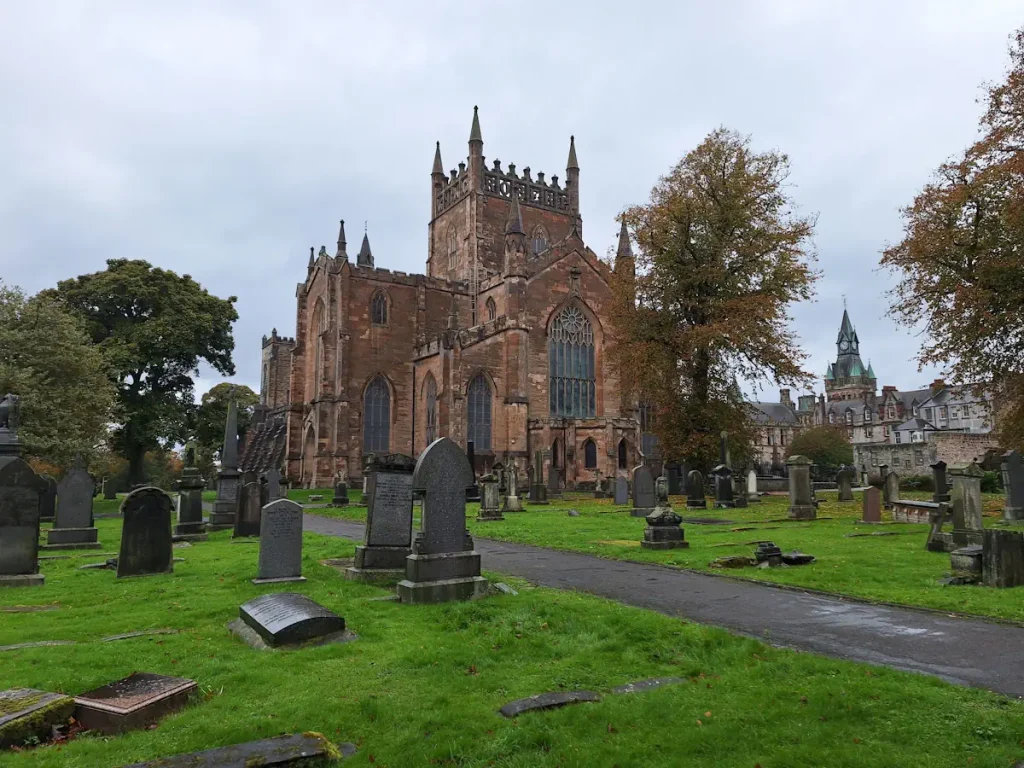
Dunfermline Abbey and Palace is a medieval Benedictine abbey and ruined royal palace in Dunfermline, Fife, about 17 miles north of Edinburgh. You can walk through the 12th-century Romanesque nave and the abbey grounds, and see Robert the Bruce’s tomb inside the 19th-century Abbey Church next door.
The palace ruins are closed for conservation at the time of checking.
Four things make up the visit.
The Romanesque Nave
The nave is the oldest standing part of the abbey, built in the 12th century in the Romanesque style by David I, Margaret’s son. The foundations of Margaret’s earlier church lie under the present floor, according to the church’s own history page. Historic Environment Scotland runs the nave for visitors.
You enter through the south-west door, which has three steep stone steps.
Inside, the floor is original stone slab and the light is low. Stained glass does most of the work.
The Abbey Church and Robert the Bruce’s Tomb
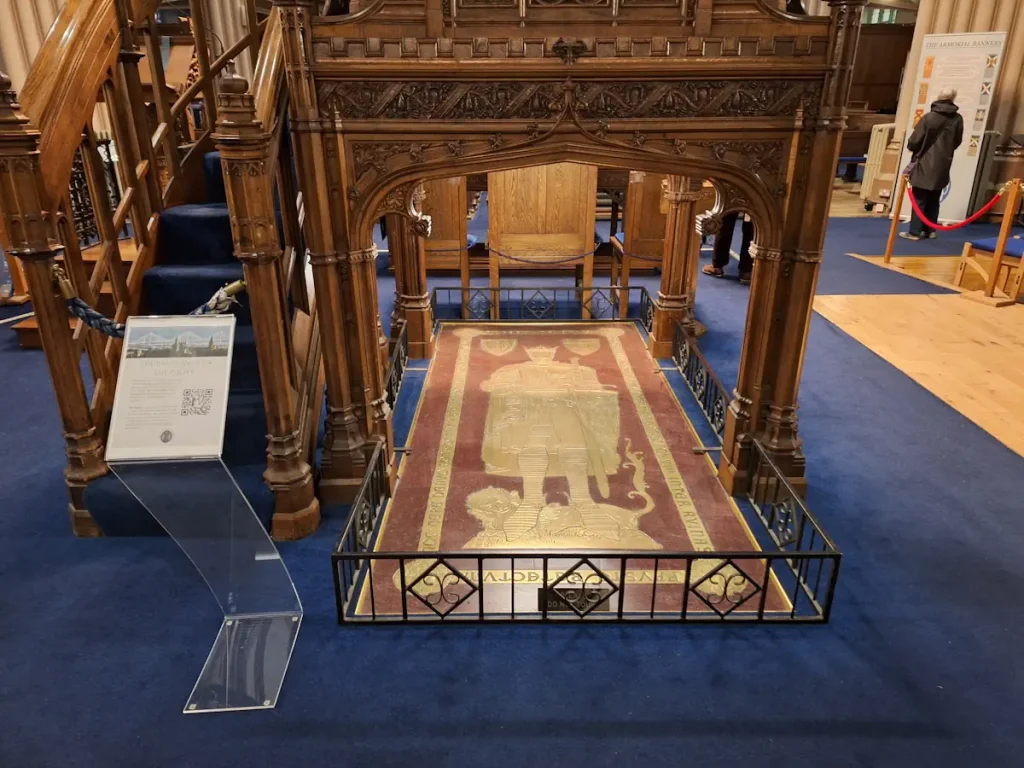
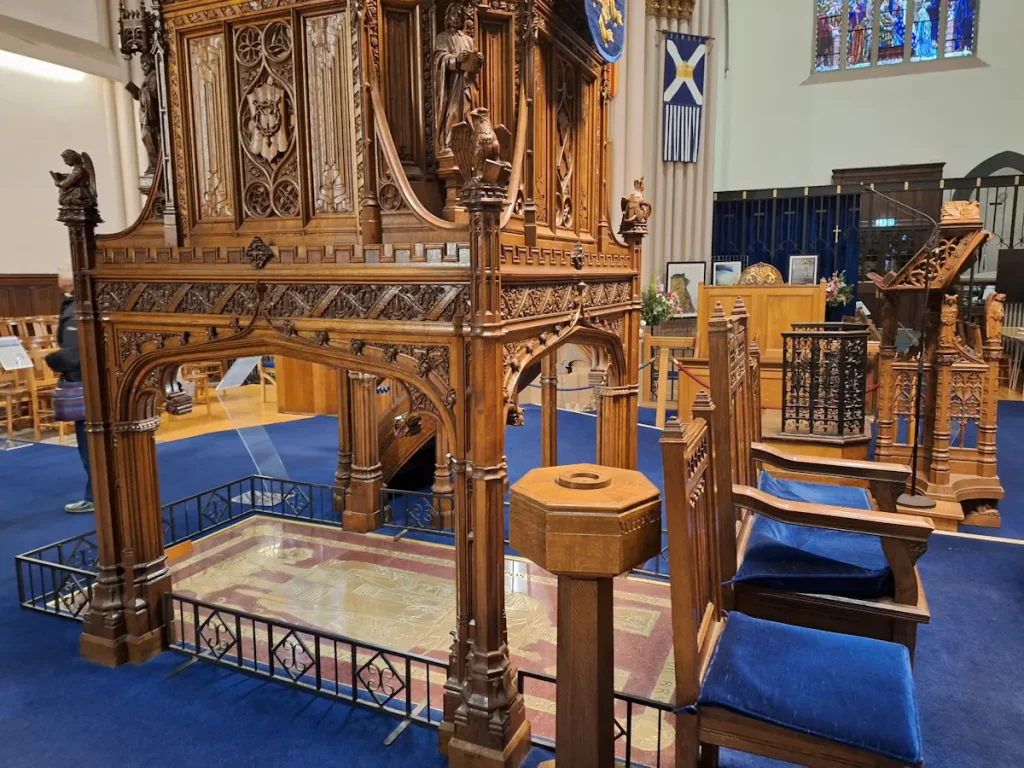
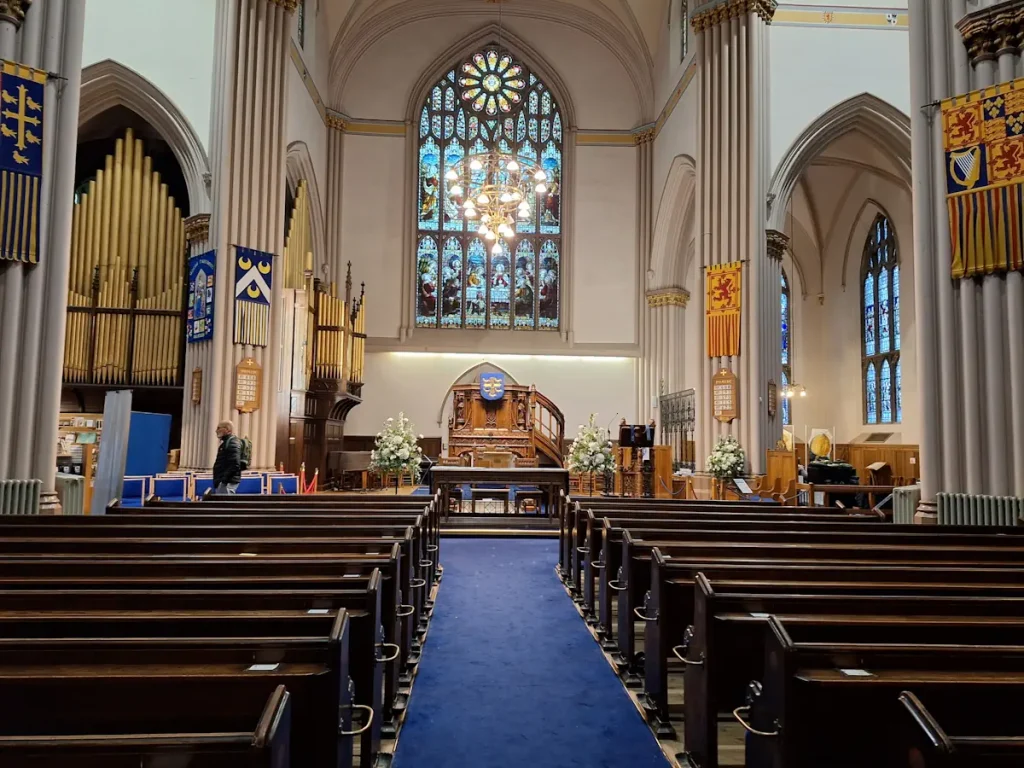
The Abbey Church is the parish church opened in 1821 on the site of the old choir, and it holds Robert the Bruce’s tomb. A full-size brass cover, dated 1889 by the church, marks the spot where his remains were reinterred.
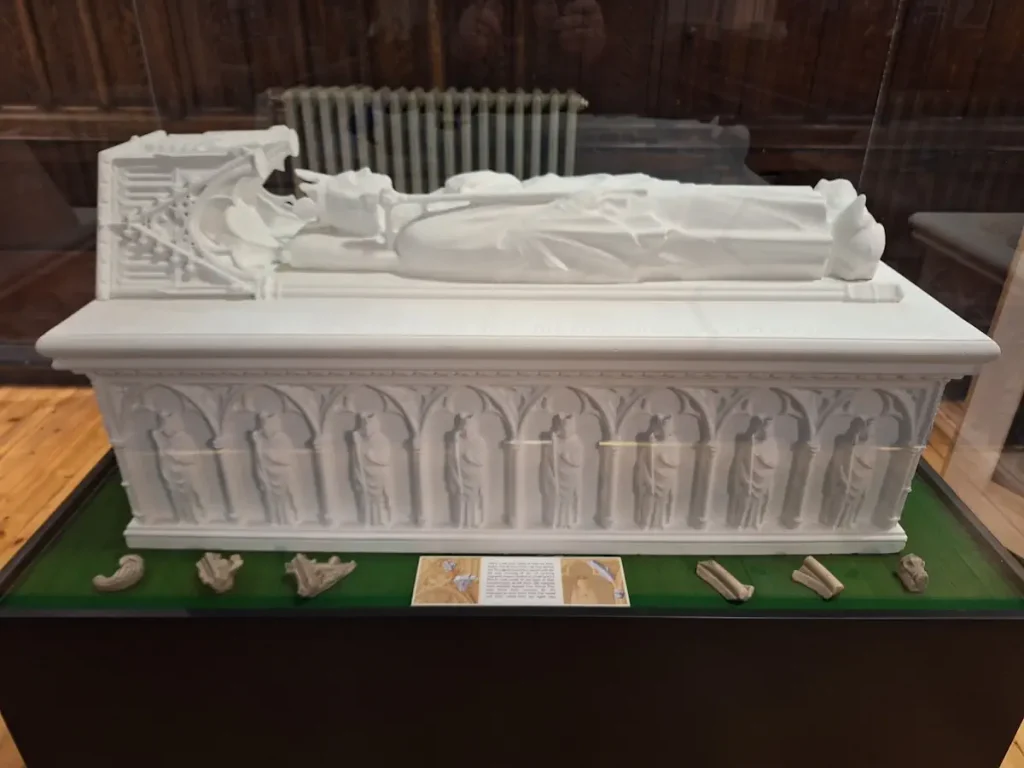
A half-scale 3D model of his lost tomb, rebuilt from 19 surviving fragments, was installed in the church in 2019. The tower carries the words King Robert The Bruce in carved stone around the top. It is a working church, so its hours follow services and events.
Look for the Carnegie Tiffany window and the Malcolm and Margaret window in the south transept.
The Refectory and Gatehouse
The refectory is the ruined monks’ dining hall, with a three-tiered wall still standing, reached by a narrow spiral staircase with no alternative route. The gatehouse is the way through from the abbey to the palace ruins, along a wooden walkway. Both are run by Historic Environment Scotland.
Dunfermline Palace
Dunfermline Palace was the abbey’s guesthouse, rebuilt as a royal residence for Anne of Denmark in the late 1580s, and Charles I was born there in 1600. Only fragments survive today, and the ruins are currently closed to visitors while conservation works continue.
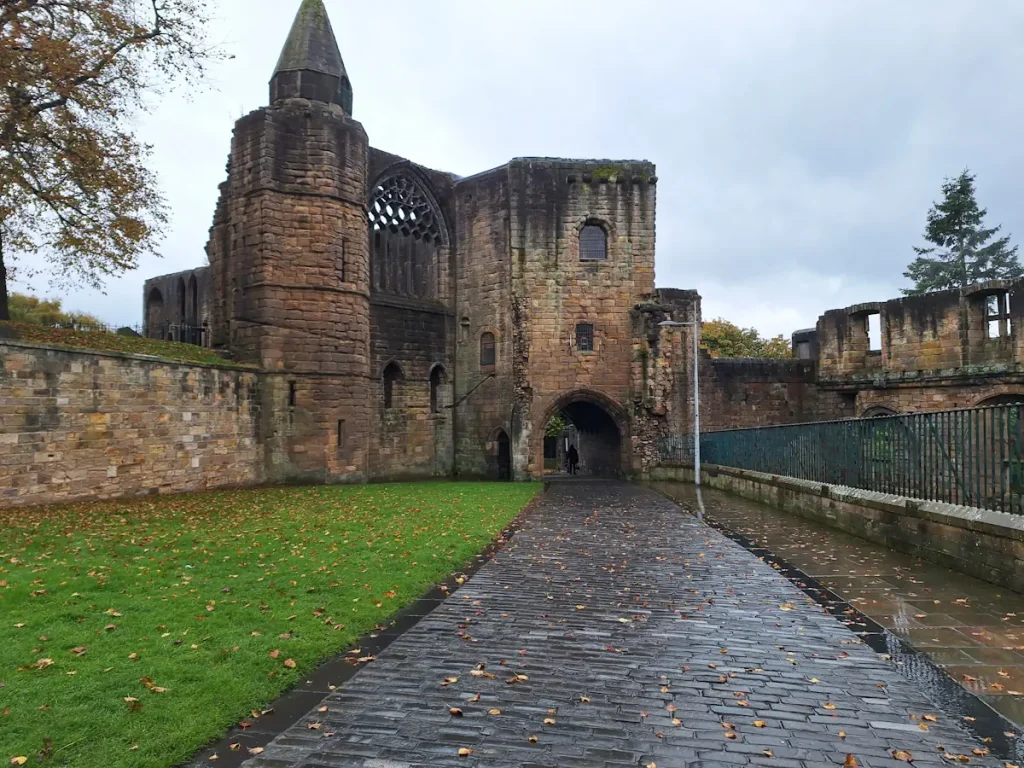
Pittencrieff Park, known locally as The Glen, lies below the abbey. The section on other Dunfermline sights, further down, covers it.
Who Is Buried at Dunfermline Abbey: Robert the Bruce, St Margaret and Scotland’s Kings
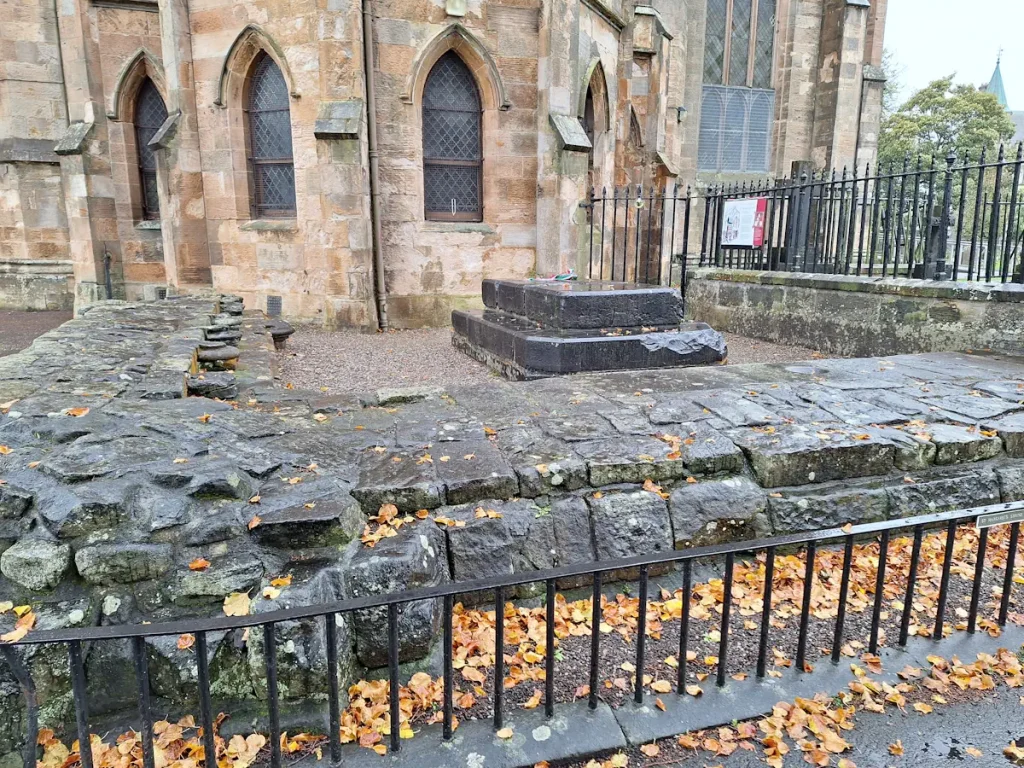
Dunfermline Abbey is the burial place of eight Scottish kings, including Robert the Bruce, along with St Margaret and other queens and princes. Bruce’s body lies beneath the present Abbey Church, while his heart was buried at Melrose Abbey. Margaret died in 1093; her remains moved to a shrine in 1250, whose plinth stands outside the church’s east end.
The royal burials include:
- Queen Margaret, who died in 1093
- David I, in 1153
- Alexander III, in 1286
- Robert the Bruce, in 1329
Bruce’s tomb was destroyed at the Reformation, along with the other royal tombs. Fragments of it and Bruce’s remains were found in 1817 and excavated in 1818. The skeleton was reinterred beneath the church and the grave sealed with a thick layer of molten bitumen, according to Historic Environment Scotland.
Others buried here include Thomas Randolph, Earl of Moray, the poet Robert Henryson and William Schaw, the Master of Works.
The abbey has been damaged more than once. English troops under Edward I destroyed the domestic buildings in 1303 but spared the church. The Reformation sack of 1560 ended the monastic community. The nave survived and stayed in use as a parish church, and the present Abbey Church was built to its east and opened in 1821. Although, to be honest, sources differ on the repair dates.
Queen Margaret is also the queen behind Queensferry’s name. The next section covers the link.
Queen Margaret: The Link Between Dunfermline Abbey and Queensferry
Queensferry is named after St Margaret, the queen buried at Dunfermline Abbey. She is said to have set up the ferry across the Forth in the late 11th century to carry pilgrims free of charge. The crossing that gave the town its name ran until 1964, when the Forth Road Bridge opened.
BBC Travel describes Margaret founding “a ‘Queensferry’ across the Forth to transport devotees” to Dunfermline.
The earliest record of the crossing dates from the mid-12th century. It calls the landing Portus Regine, “the queen’s port”. Later sources call it the ferry of Saint Margaret the queen. If you’re visiting Queensferry, head to the Binks carpark where you can see the original natural jetty where the ‘queen’s ferry’ departed.
The abbey and the ferry were tied together. Margaret died in 1093 and was buried at Dunfermline. Her son David I is said to have given the ferry rights to the abbey.
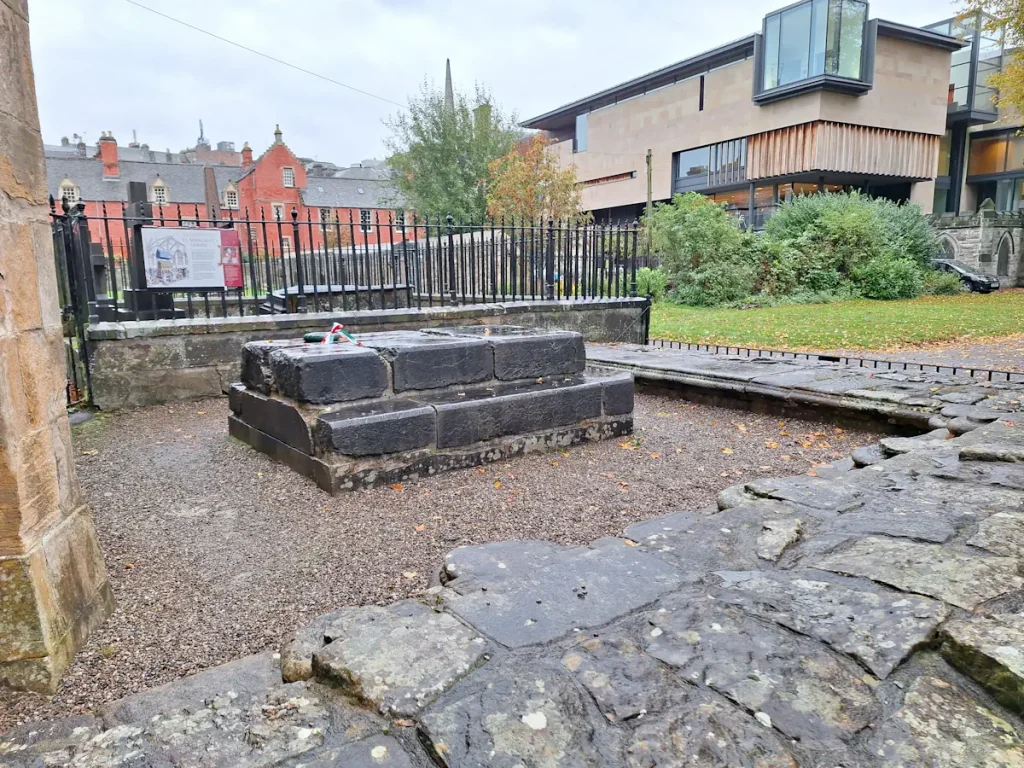
Her shrine is in the abbey grounds. The plinth of her 1250 tomb stands in the open air outside the east end of the Abbey Church.
Pilgrims followed the same route inland. It is now the Fife Pilgrim Way, and the North Queensferry to Dunfermline section is 8.5 miles, about 4.5 hours, with a long stretch of pavement into the town, according to Fife Coast and Countryside Trust. Check the trust’s page for diversions before you walk it.
In South Queensferry, plaques at the Binks mark the old ferry landing. Our Queensferry walking tour stops there.
Our chapter on Queen Margaret and the birth of the ferry covers the crossing in more detail.
Abbey Church, Nave and Palace: Who Runs What at Dunfermline
Two organisations look after the site. Historic Environment Scotland runs the nave, the grounds, and the ruined palace and refectory. The Abbey Church, which holds Robert the Bruce’s tomb, is a working Church of Scotland church that welcomes visitors in partnership with Historic Environment Scotland.
Church hours can change for services and events, so Bruce’s tomb is not always open.
This is where most guides go wrong. They blur “the abbey”, “the old abbey church” and “the new abbey church” into one thing.
Here they mean three different parts:
- The nave: the 12th-century church, run by Historic Environment Scotland
- The Abbey Church: the 1821 parish church with Bruce’s tomb
- The palace ruins: the former guesthouse, currently closed
Sunday morning worship is at 10.30am.
Dunfermline Abbey Opening Times, Tickets and Booking
At the time of checking, the Abbey Church, which holds Robert the Bruce’s tomb, listed opening as Tuesday to Saturday, 10am to 4pm, with Sunday and Monday closed. Historic Environment Scotland runs the nave and grounds separately, with its own hours. Check both before travelling, because the church posts its hours week by week.
The church’s own visit page shows:
- Tuesday to Saturday: 10am to 4pm
- Sunday and Monday: closed
- Last entry: 4pm
The same page says the church welcomes visitors throughout the year, in partnership with Historic Environment Scotland, except on specified dates. Services and events can close it.
Is Dunfermline Palace Open? The Closure and How to Check
Dunfermline Palace was closed at the time of checking, with Historic Environment Scotland citing ongoing conservation works. The abbey nave, grounds and Abbey Church stay open, so the visit still works without the palace. Closures change, so check Historic Environment Scotland’s closures page before travelling and note the date this page was last checked.
The church also has one-off closures for services and events. Historic Environment Scotland posts those on the same notice page.
Getting to Dunfermline Abbey From South Queensferry and Edinburgh
From South Queensferry, take a train from Dalmeny station on the Fife Circle line to Dunfermline City, then walk about half a mile to the abbey. Northbound Fife Circle trains serve Dunfermline City roughly every 30 minutes on weekdays and Saturdays. Confirm the exact Dalmeny departure on ScotRail or Traveline before you set off.
By Train From Dalmeny and South Queensferry
Dalmeny station is on the Fife Circle line, with four trains an hour each way Monday to Saturday and two an hour on Sundays. Trains heading north round the circle serve Dunfermline City, so the journey from South Queensferry needs no trip into Edinburgh first.
Heading north, the train crosses the Forth Bridge. If you want to know which bridge is which, see our Forth Bridges guide.
The steps behind the Hawes Inn – yes the 118 steps up Jacob’s Ladder to get to the station is the way to go. Just be sure you’re in good shape for the climb. Our transport guide covers the walk to Dalmeny in full.
By Train From Edinburgh Waverley
Trains run from Edinburgh Waverley to Dunfermline City roughly every 30 minutes on weekdays and Saturdays, and the journey takes about 30 to 35 minutes across the Forth Bridge. The station was called Dunfermline Town until October 2022, so older guides use the wrong name.
Get off at Dunfermline City. The next stop, Dunfermline Queen Margaret, serves the eastern suburbs and is not the one for the abbey.
Historic Environment Scotland puts the site half a mile from the station. Other guides say about ten minutes on foot.
By Bus or Car
Stagecoach East Scotland runs the X55 bus service from Edinburgh to Dunfermline bus station, about 0.2 miles from the abbey. You can also get the bus from the bus stop at the Forth Road Bridge. By car, the site has no visitor car park: you can be dropped off near the entrance, with on-street parking about 100 metres from the nave.
From the Cruise Port
If your ship anchors off South Queensferry, the South Queensferry cruise port guide covers getting ashore at Hawes Pier, and the Dalmeny train route above takes you on from there. If you dock at Rosyth, which is also in Fife, see our Rosyth cruise terminal guide for how to reach Dunfermline.
Accessibility, Toilets and Parking at Dunfermline Abbey
There are no visitor toilets or car park at the site. The nearest toilets, including adapted and Changing Places facilities, are at Dunfermline Carnegie Library, about 100 metres away. The nave door has three steep steps, and level access needs arranging in advance through Historic Environment Scotland.
The Abbey Church has a ramped entrance at its north-east door.
- The nave floor is level inside, with historic stone slabs and low light.
- The refectory is reached by a narrow spiral staircase with no alternative route.
- Assistance dogs are allowed in roofed areas. Visitors’ pet dogs are not.
- There are no accessible parking bays, according to Historic Environment Scotland.
Beyond the Abbey: Carnegie, Pittencrieff Park and Other Dunfermline Sights
Dunfermline’s other main sights sit close to the abbey. The Andrew Carnegie Birthplace Museum, Pittencrieff Park and Abbot House are the three most visitors add, with the Carnegie Library and Galleries and St Margaret’s Cave for those with more time. Carnegie, born in the town, paid for the park and the library.
Andrew Carnegie Birthplace Museum
The Andrew Carnegie Birthplace Museum is on Moodie Street is built around the small cottage where Carnegie was born, with a larger memorial hall telling his story from a weaver’s son in Dunfermline to American steel and philanthropy. Entry is free, and the museum says it opens seven days a week, 11am to 4pm.
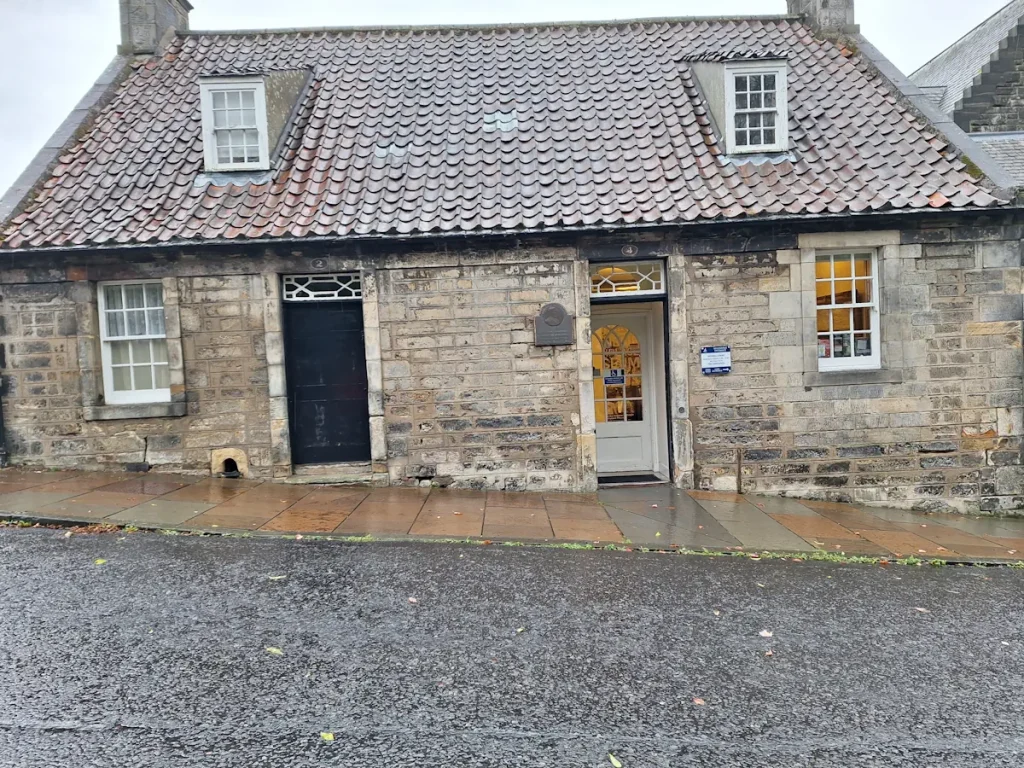
Last entry is at 3.20pm. The cottage takes up to about 15 minutes, and the hall has no time limit. (Source: Andrew Carnegie Birthplace Museum.
Pittencrieff Park
Pittencrieff Park, known locally as The Glen, is a 76-acre public park below the abbey. Carnegie bought the estate in 1902 and gave it to the people of Dunfermline in 1903. It is open all year, with woodland walks, a glasshouse, playgrounds and resident peacocks.
- Pittencrieff House: the 15th-century mansion at the centre of the park
- The Lorimer gates, from 1908, and the Carnegie statue, from 1914
- The remains of Malcolm’s Tower, the stronghold Malcolm III is said to have built on high ground, according to BBC Travel
Abbot House
Abbot House on the Maygate is described by Welcome to Fife as Dunfermline’s oldest dwelling, with roots in the 16th century. It sits near the abbey and now holds creative studios, a gift shop, a café and a walled garden.
Dunfermline Carnegie Library and Galleries
Dunfermline Carnegie Library and Galleries is the museum covering the city’s history, industry and culture, and it is also the nearest toilet stop to the abbey, about 100 metres from the nave. Andrew Carnegie gifted the library to his home town. BBC Travel notes that its upper floor has floor-to-ceiling windows looking out over the abbey.
Church of St Margaret
The Church of St Margaret is a church a short walk from the abbey. BBC Travel reports that it keeps a relic of Queen Margaret, a fragment of her shoulder bone, which pilgrims still come to see. It is separate from the shrine plinth in the abbey grounds.
St Margaret’s Cave
St Margaret’s Cave is a small cave reached by an 87-step staircase, where Queen Margaret is said to have prayed. It appears on Welcome to Fife’s list of Dunfermline attractions and ties the town’s main story back to the queen the abbey is built around.
Two more buildings are worth a look if you pass them: the Alhambra theatre, and the cobbled streets and wynds of the Heritage Quarter.
If you have another day in Fife, Culross, the Outlander village of Cranesmuir, lies further west along the coast. See our Outlander in Culross guide.
Where to Eat Near Dunfermline Abbey
Dunfermline’s centre has options for a coffee, a café lunch, a sit-down meal, vegan food and a pub, listed below. The local tourism site lists four of them, and the fifth is the town’s Wetherspoon. Check opening days before you go, because none of these listings confirms current hours.
- Prost Coffee, Abbot House, the Maygate: independent coffee shop with home baking and sandwiches, in a house with a walled garden. It is dog friendly, which helps because pet dogs are not allowed in the abbey’s roofed areas.
- Fire Station Creative, Carnegie Drive: arts venue with a café serving lunches, plus a cocktail bar and a garden.
- Jack ‘O’ Bryan’s, Chalmers Street: restaurant serving meat and fish dishes, by its own description.
- 269 Vegan, New Row: independent vegan café with smoothies, cakes, bagels and waffles.
- The Guildhall and Linen Exchange, 79 to 83 High Street: the town’s Wetherspoon, in a classical building whose foundation stone was laid in 1807. Its tiered steeple is a local landmark.
How Long to Spend at Dunfermline Abbey
Allow one to two hours for the abbey nave, the Abbey Church and Robert the Bruce’s tomb. Adding Pittencrieff Park and the Carnegie Birthplace Museum makes it a half day. Check the Birthplace Museum’s own opening times first, because they run separately from the abbey. Most attractions – the Abbey and Carnegie’s Birthplace Museum are open until 4 pm.
With the palace closed, the abbey alone fills the shorter end of that range. The longer end covers a slow look round the Abbey Church and the grounds.
Dunfermline Abbey by Tour From Edinburgh
Several Edinburgh-based day tours include Dunfermline Abbey as one stop, usually alongside Rosslyn Chapel, Stirling Castle or St Andrews. These suit visitors without a car, but the abbey is one stop among several. Check each itinerary for how long the tour stays at the abbey and where it starts.
Tour types currently listed:
- Rosslyn Chapel, Dunfermline Abbey and Stirling Castle, about nine hours
- Rosslyn Chapel, the Wallace Monument and Dunfermline Abbey, about nine hours
- A private St Andrews, Dunfermline and Fife day, about eight hours
If the abbey is the reason for the trip, go by train. The tour gives you the stop; the train gives you the time.
Building your own day instead? See places to visit near Queensferry, the Falkirk Wheel and Kelpies guide, and our St Andrews shore excursion guide for tours that pair St Andrews with other Fife stops.
Frequently Asked Questions
Is there a Dunfermline Castle?
Searches for Dunfermline Castle usually lead to Dunfermline Palace, the ruined royal residence beside the abbey. Historic Environment Scotland lists the site as Dunfermline Abbey and Palace. The palace was built from the abbey’s guesthouse, so it sits within the same site rather than standing as a separate castle. There was an earlier royal stronghold, Malcolm’s Tower, whose remains are in Pittencrieff Park, and was build by King Malcom III (Malcome Canmore).
Was Dunfermline the capital of Scotland?
Dunfermline is often called Scotland’s ancient capital, and the abbey church’s own history page calls it the former capital. It was a royal seat for centuries, until the court moved to London in 1603, and it became a city in May 2022.
Why is Dunfermline Abbey partly ruined?
Most of the abbey was destroyed at the Reformation in 1560, but the nave survived and stayed in use as a parish church. The present Abbey Church was built to its east and opened in 1821. Historic Environment Scotland looks after the nave and ruins, and the church runs the newer building.
Was Charles I born at Dunfermline Palace?
Yes. Charles I was born at Dunfermline Palace in 1600, three years before the Union of the Crowns took his father, James VI, to London. The palace had been made from the abbey’s old guesthouse for James’s queen, Anne of Denmark. Only fragments survive, and the ruins are currently closed.
Can you see Robert the Bruce’s tomb?
Yes, inside the Abbey Church, where a full-size brass marks the spot where his remains were reinterred after being excavated in 1818. The church is a working place of worship, so access depends on its hours and services. Check the church’s visit page or Historic Environment Scotland before travelling.
Can you take a dog to Dunfermline Abbey?
Assistance dogs are allowed everywhere, including roofed areas, but must stay on a lead, are never to be left unattended, and owners must clean up after them. Visitors’ pet dogs are not permitted in roofed areas, which includes the nave and the Abbey Church.
Can you park at Dunfermline Abbey?
There is no visitor car park at the site. You can be dropped off near the entrance, and on-street parking is about 100 metres from the nave entrance. Town centre car parks are the fallback. If the three small car parks are full, there is usually parking beside the Carnegie’s Birthplace Museum
Is there a bus from Edinburgh to Dunfermline?
Yes. Stagecoach East Scotland runs bus services from Edinburgh to Dunfermline, and the bus station is about 0.2 miles from the abbey, according to Historic Environment Scotland. Services cross the Forth, so they suit visitors without a car. Check current route numbers, fares and times on Traveline Scotland.

Scott Gibson grew up in South Queensferry and runs queensferry.net. The Forth and Edinburgh guides come from lived experience — tender days at Hawes Pier, cruise traffic, the shortcuts into the city. For the wider Scotland cruise ports, he draws on friends in some of the port towns alongside port, operator and transport sources — so the detail holds up on the ground, not just on paper. Clear directions, real timings, no brochure fluff.