

This post may contain affiliate links. If you book through them, I may earn a small commission at no extra cost to you. I only recommend personally curated options that make sense for cruise passengers and independent travellers.
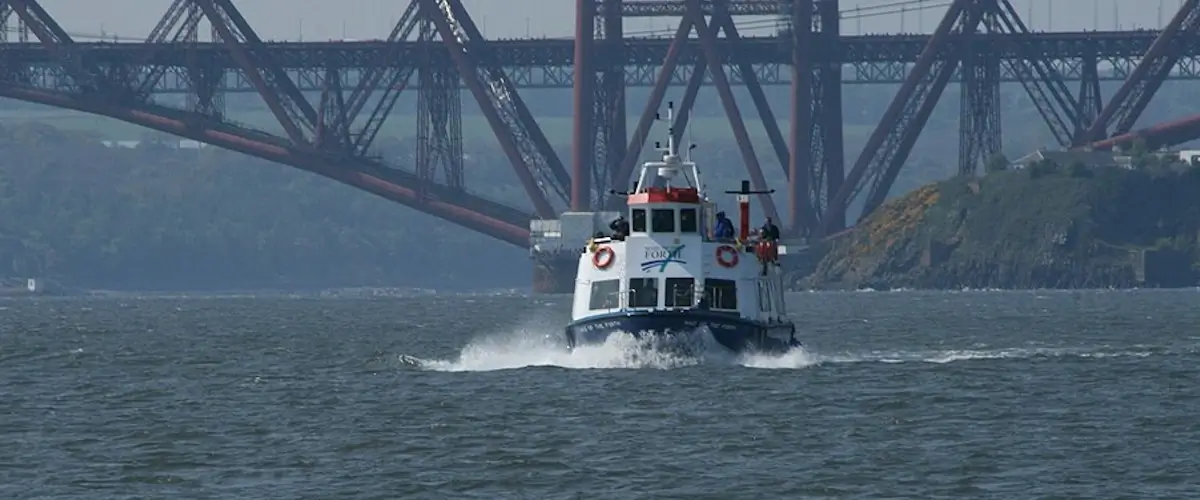
Inchcolm Island is one of the easiest shore excursions from South Queensferry, especially if your cruise tender lands at Hawes Pier. Instead of joining the coach traffic into Edinburgh, you can be on the water within minutes, sailing under the Forth Bridge toward a small island with an abbey, seals, wartime tunnels, and proper breathing room.
That does not mean Edinburgh is the wrong choice. For first-time visitors, the city still pulls hard. But if you have seen the Royal Mile before, dislike tight group tours, or want a port day that starts where your tender lands, Inchcolm makes a lot of sense.
Of course, you’re spending your time on a cruise ship, and maybe you don’t want to be bobbing up and down on the Maid of the Forth after the tender trip to the Hawes Pier. But the trip to Inchcolm Island is one that many visitors to South Queensferry talk about long after they’ve left the island.
The catch is the planning. Departure points change, landing fees are separate, and your time ashore is fixed. Get those details right, and Inchcolm becomes one of the cleanest, least stressful half-day trips from the port.
Quick Decision: Is Inchcolm Island Worth it on a Cruise Day?
| Choose Inchcolm Island if… | Choose Edinburgh if… |
|---|---|
| You want a slower shore excursion close to the tender pier. | This is your first visit to Edinburgh and you want the headline sights. |
| You like abbeys, seals, sea views, and self-guided exploring. | You want Edinburgh Castle, the Royal Mile, museums, or shopping. |
| You prefer a 3-hour trip that leaves time for South Queensferry. | You are happy spending most of the day in the city centre. |
| You want less crowd pressure than a coach-based city excursion. | You need step-free, predictable city facilities throughout the day. |
Boat Tours from Queensferry to Inchcolm Island
The Inchcolm boat leaves from Hawes Pier itself — no transport puzzle, no coach. Sailings are tide- and season-dependent though, so check dates and availability ahead rather than assuming a boat runs on your day.
Still undecided on whether to go to Edinburgh or stay in South Queensferry on your cruise day? Our Edinburgh vs. South Queensferry decision tool will help you decide.
How to Get to Inchcolm Island from South Queensferry
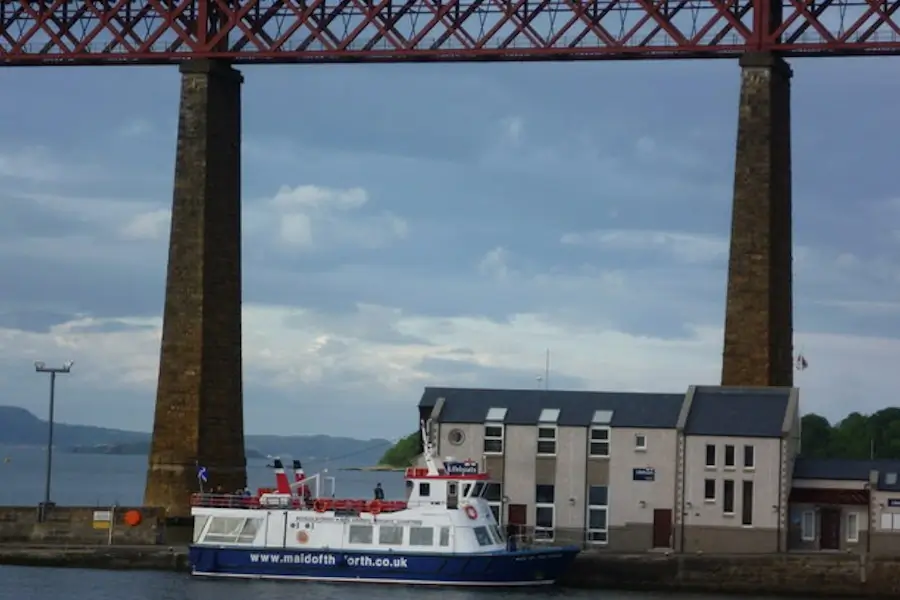
Inchcolm Island trips usually work well for cruise passengers because the main departure point is Hawes Pier, the same area where tenders normally land in South Queensferry. That can make the whole thing feel unusually easy for a shore excursion.
Still, check your ticket before you relax. Maid of the Forth sails from Hawes Pier, while some Forth Boat Tours departures use Port Edgar Marina, about a mile west along the waterfront. Port Edgar is still in South Queensferry, but it is not the same pier. That distinction matters when your ship has a fixed all-aboard time.
Most landing trips take about 3 hours, with around 90 minutes on Inchcolm itself. That is enough time for the abbey, the wartime remains, and a quick wildlife look – but only if you do not wander off in the wrong order.
Local advice: go straight to the abbey after landing. Do the coastline and seals after. The island looks small from the boat, but 90 minutes disappear quicker than you expect.
The Logistics: Getting from Hawes Pier to the Island
Getting to Inchcolm Abbey is straightforward once you understand the departure setup — but missing one key detail could cost you both time and money.
| Detail | What cruise passengers should know |
|---|---|
| Main cruise arrival point | Most South Queensferry cruise passengers arrive by tender at Hawes Pier. |
| Possible boat departure points | Hawes Pier or Port Edgar Marina, depending on operator and sailing. |
| Typical trip length | About 3 hours for an Inchcolm landing trip. |
| Time ashore | Usually around 90 minutes on the island. |
| Best first stop | Go straight to Inchcolm Abbey, then use spare time for wildlife and views. |
| Main planning risk | Assuming Hawes Pier and Port Edgar are interchangeable. They are not. |
Pro-Tip — Port Edgar Marina: If your confirmation email lists Port Edgar Marina as the departure point, allow an extra 15–20 minutes to walk or arrange a short taxi from Hawes Pier. Don’t assume both locations are interchangeable on the day.
With the logistics handled, the real reward waits on the island itself — and the abbey is more extraordinary than most visitors expect.
Inchcolm Island Boat Tours from South Queensferry
Some passenger who decides to stay in Queensferry choose a boat excursion from Hawes Pier. Sailings are season- and tide-dependent though, so check dates and availability ahead rather than assuming a boat runs on your day.
QueensferryThe Cost of Admission: Fees and Passes Explained
Inchcolm Island operates a two-tier pricing system that catches many visitors off guard — and understanding it upfront is the key to avoiding an awkward surprise at the pier.
The boat fare and the island landing fee are two completely separate charges. According to Historic Environment Scotland, adults pay approximately £8.50–£9.50 on top of the boat ticket just to set foot on the island. Children and concession rates are lower, but the additional cost applies across the board. Here’s a quick breakdown of what to budget:
| Cost | Typical adult price | Important note |
|---|---|---|
| Sightseeing Boat ticket | £18 | 1.5-hour cruise. Paid to the boat operator. Prices vary by sailing and season. |
| Boat Ticket + Island Stop | £21 | 3-hour cruise stopping at the island |
| Island landing fee | Usually around £8.50–£9.50 | Paid separately unless included in your booking. |
| Historic Scotland members | Landing fee usually covered | You still pay for the boat crossing. |
Historic Environment Scotland — the Lead Public Body responsible for managing the abbey — offers meaningful savings for members and Explorer Pass holders. If you hold either, the landing fee is waived entirely, which adds up fast for families.
Booking advice: If you have a pass, book the boat and landing separately. Many operators bundle both costs automatically — paying for admission you don’t need is a common, avoidable mistake. If you’re still weighing whether to combine this with a broader cruise day, this guide to planning your port day lays out the tradeoffs clearly.
⚠ Pre-book the boat during cruise season (May–September). Departures fill quickly, and missing the last boat means missing the island entirely.
Exploring Inchcolm Abbey: Scotland’s Most Complete Monastery
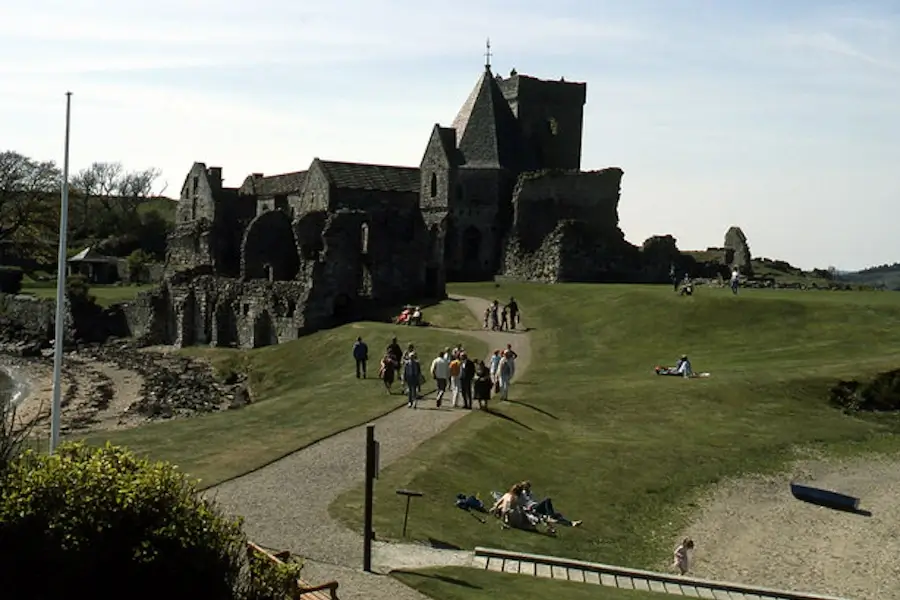
Inchcolm Abbey is the centrepiece of any visit to Inchcolm Island Firth of Forth Scotland — and its 800-year-old stones reward anyone who takes time to look closely.
The Abbey: Founded in the 12th century by Augustinian monks, Inchcolm Abbey is recognised by Historic Environment Scotland as the most complete surviving group of monastic buildings in Scotland. That’s not curatorial hyperbole — the walls, vaulted ceilings, and passageways are largely intact in a way that roofless Scottish ruins rarely are.
The Chapter House: The rare octagonal chapter house is the architectural standout. Most medieval chapter houses follow a rectangular plan, making Inchcolm’s eight-sided design a genuine anomaly worth pausing over. The acoustics inside are striking — voices carry in ways that immediately explain why monks gathered here for daily readings.
The Fresco: On the inner walls, a 13th-century painted funeral procession survives in faded but legible fragments. It’s one of the oldest pieces of medieval wall painting still visible in Scotland, and it tends to stop visitors mid-stride. Fragments this old rarely survive Scotland’s damp climate without protective enclosure.
The Cloisters: The cloister walk is considered the most complete of its kind in Scotland. Sheltered on all four sides, it gives a real sense of monastic daily life — the rhythm of prayer, work, and study that defined centuries of island existence.
Beneath all of this medieval history, however, the island holds a completely different layer of the past — one built not for prayer, but for defense.
Fortress Forth: The Island’s Secret Military History
Most visitors who come to visit Inchcolm Island focus entirely on the abbey — but the island’s 20th-century military layer is equally compelling and almost entirely overlooked.
According to Historic Environment Scotland, Inchcolm served as a critical military outpost known as “Fortress Forth” during both World Wars, tasked with protecting the Rosyth naval base and the strategically vital Forth Bridge from enemy naval attack. At its peak, the garrison housed up to 500 soldiers — a remarkable number for an island barely half a mile long.
The physical evidence is hiding in plain sight. Once you know what to look for, the island reads like an open-air military museum:
- Concrete gun emplacements sit half-buried in the hillside, their angular profiles a stark contrast to the abbey’s medieval stonework
- Searchlight posts positioned at the island’s edges once swept the Firth for enemy vessels after dark
- Military barracks and observation platforms still stand in varying states of preservation
Don’t Miss: The 1916 Ammunition Tunnel — a low-ceilinged, atmospheric passage cut directly into the island’s rock that once supplied the defensive gun batteries. It’s entirely walkable and one of the most memorable five minutes you’ll spend on any shore excursion. If you’re prone to planning tight timelines, it’s worth reading up on common port day mistakes before you go — this tunnel alone justifies building in extra time on the island.
The layering of medieval monastery and 20th-century fortification makes Inchcolm unlike anywhere else. And the island still has more surprises — above the waterline, at least.
Wildlife Encounters: Seals, Puffins, and Gulls
Inchcolm Island is a significant wildlife sanctuary, and the creatures you encounter here are often just as memorable as the abbey itself.
The resident grey seals are the undisputed stars. A colony regularly hauls out on the Haystack rock near the island’s shore, and on any given visit, you’re likely to spot a dozen or more lounging in blissful indifference to passing boats. Position yourself on the starboard (right) side of the vessel during the inchcolm island cruise approach for the best photography angles — the light is typically favourable in the morning, and the seals are close enough for clear shots without a zoom lens.
Seasonal birdwatching transforms the island between May and July. Puffins nest in burrows along the grassy banks, fulmars glide on updrafts above the cliffs, and kittiwakes crowd every available ledge. According to The Forth Bridges, the island is particularly noted for its nesting seabird colonies during this period. Here’s a seasonal guide to what you’ll see:
| Month | What you may see | Local warning |
|---|---|---|
| March–April | Grey seals and early seabirds | Weather can still feel sharp on the water. |
| May–July | Puffins, fulmars, kittiwakes, nesting seabirds | Gulls can be aggressive near nesting areas. |
| August–September | Juvenile seabirds and seals | Good mix of wildlife without peak nesting chaos. |
| October | Grey seals and quieter island conditions | Shorter opening hours and more weather risk. |
| November–March | No normal island landing access | Inchcolm Abbey is closed in winter. |
One candid warning: nesting season means territorial gulls. Large herring gulls will dive-bomb visitors who stray near nest sites — it’s locally nicknamed “Seagull Hell” for good reason. Stay on marked paths and consider a hat.
If you’re planning a Firth of Forth boat trip around wildlife priorities, May through June offers the richest combination of species. Beyond the wildlife, however, there’s the practical question of what the visit actually costs — which is worth understanding before you book.
Is Inchcolm Island Worth It on a Cruise Day?
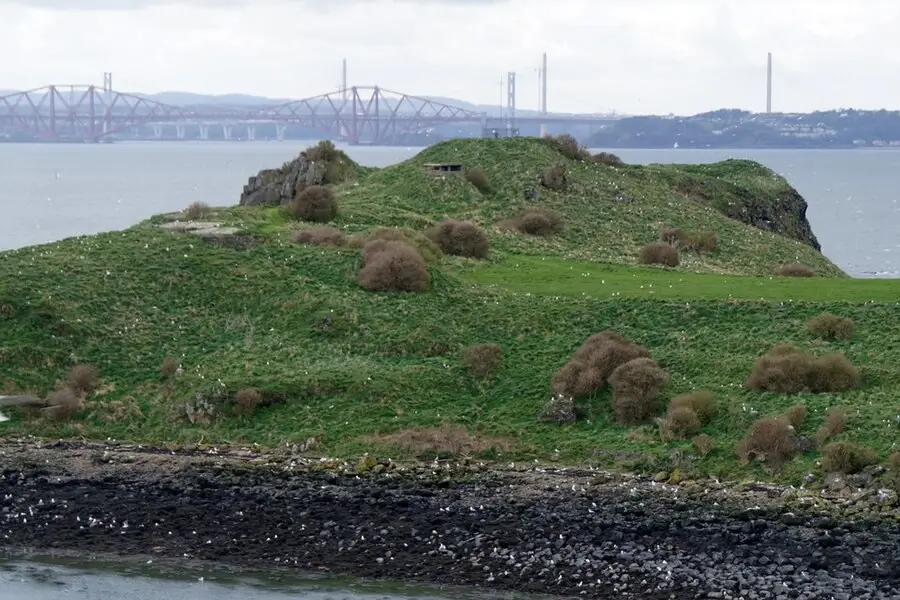
Yes – Inchcolm Island is worth it if you want a compact, low-stress shore excursion from South Queensferry. It gives you a Firth of Forth boat trip, a medieval abbey, wildlife, wartime remains, and views of the bridges without committing your whole day to Edinburgh.
The trip works best for repeat Edinburgh visitors, photographers, history fans, and passengers who dislike long coach transfers. It also suits people who want time left for lunch or a short walk around South Queensferry after the boat returns.
It is not ideal for everyone. The island has uneven ground, limited facilities, no café, and some awkward surfaces around the abbey and coastal paths. In nesting season, the gulls can be bold enough to make you question your life choices.
For most able-bodied visitors, though, the balance is strong. Three hours gives you a proper excursion without turning the day into a military operation. That is the quiet beauty of Inchcolm: it feels like an escape, but it is sitting almost in front of the ship.
Who Should Skip It?
Inchcolm Island is not the best choice if you have serious mobility concerns, need reliable café or toilet facilities, or want a fully guided, step-free day. The ground is uneven, the island is exposed, and nesting gulls can be aggressive in season. First-time visitors set on Edinburgh Castle or the Royal Mile should choose the city instead.
Add Time in South Queensferry Before or After the Boat
Do not treat South Queensferry as a gangway with pubs attached. The town is small, but it rewards even an extra hour before or after your Inchcolm trip.
If your sailing leaves from Hawes Pier, you are already beside the Forth Bridge, the Hawes Inn, the waterfront path, and the lower end of town. From there, the High Street is an easy walk, with cafés, pubs, bakeries, bridge views, and a few corners cruise brochures usually flatten into “Edinburgh transfer point.”
You’ll find that there are plenty of things to do in South Queensferry, even if you’ve only 1–2 hours in the town. The town is full of quaint restaurants, authentic pubs, and plenty of angles to get the best shots of the Forth Bridges.
We’ve also created a self-guided walking tour of Queensferry to learn about the town’s rich history and so you don’t miss any of the notable landmarks that many other visitors to Queensferry miss.
Questions Visitors to Queensferry Ask About Inchcolm Island
Is Inchcolm Island worth visiting?
Yes, Inchcolm Island is worth visiting if you want a short Firth of Forth boat trip, a remarkably complete medieval abbey, wildlife, and quieter shore time away from Edinburgh crowds. It works especially well for cruise passengers arriving at South Queensferry.
Can cruise passengers visit Inchcolm Island from South Queensferry?
Yes. Inchcolm Island is one of the easiest shore excursions from South Queensferry if sailing times match your ship schedule. Many cruise passengers tender to Hawes Pier, close to one of the main departure points for Inchcolm boat trips.
How do you get to Inchcolm Island?
You reach Inchcolm Island by boat from South Queensferry. Maid of the Forth usually sails from Hawes Pier, while Forth Boat Tours may use Port Edgar Marina. Always check your ticket carefully, as the two departure points are not the same place.
How long does an Inchcolm Island trip take?
Most Inchcolm Island landing trips take about three hours in total, including the boat journey and around 90 minutes ashore. That is enough time to explore Inchcolm Abbey, see the wartime remains, and look for wildlife if you plan your route well.
Are there puffins on Inchcolm Island?
Yes, puffins can be seen around Inchcolm Island in season, usually from late spring into summer. Sightings are never guaranteed, but May to July is generally the best period for seabirds, including puffins, fulmars, kittiwakes, and nesting gulls.
What wildlife can you see on Inchcolm Island?
Common wildlife around Inchcolm Island includes grey seals, seabirds, and seasonal puffins. Grey seals are often seen hauled out near the island, while nesting birds are most active from late spring through summer.
What was Inchcolm Island used for?
Inchcolm Island has been used as a religious site, a monastic settlement, and a military defensive position. Its abbey dates back to the medieval period, while later gun emplacements and tunnels show its role in protecting the Firth of Forth during wartime.
Who lives on Inchcolm Island?
No permanent community lives on Inchcolm Island today. The island is managed as a historic site and wildlife area, with visitors arriving by boat during the open season. Its most regular residents are seals, seabirds, and plenty of bold gulls.
Is there a toilet on Inchcolm Island?
Facilities on Inchcolm Island are limited, so do not rely on full visitor services. Check current facilities before travelling and use toilets before boarding if needed. There is no café or shop on the island, so bring water and snacks.
Is Inchcolm Island suitable for people with mobility issues?
Inchcolm Island is difficult for visitors with significant mobility issues. The ground is uneven, with grass, stonework, steps, and exposed paths. Anyone needing step-free access or predictable surfaces may find Edinburgh or South Queensferry easier.
Do you pay a landing fee for Inchcolm Island?
Yes, the boat fare and island landing fee are usually separate unless your booking says otherwise. Historic Scotland members and pass holders may have the landing fee covered, but they still need to pay for the boat crossing.
Can you visit Inchcolm Island and South Queensferry on the same day?
Yes. An Inchcolm Island trip usually takes about three hours, leaving time to explore South Queensferry before or after the boat. The High Street, Hawes Pier, waterfront, cafés, pubs, and bridge viewpoints are all close together.
Picture: Maid of Forth Bridge tormentor4555, BY-SA 3.0 via Wikimedia Commons.
Picture: Maid of Forth Bridge kim traynor, CC BY-SA 2.0 via Wikimedia Commons.
Picture: The west end of Inchcolm Island Mike Pennington CC BY-SA 2.0 via Wikimedia Commons.
Dr Duncan Pepper / Inchcolm Island, Firth of Forth / CC BY-SA 2.0

Scott Gibson grew up in South Queensferry and runs queensferry.net. The Forth and Edinburgh guides come from lived experience — tender days at Hawes Pier, cruise traffic, the shortcuts into the city. For the wider Scotland cruise ports, he draws on friends in some of the port towns alongside port, operator and transport sources — so the detail holds up on the ground, not just on paper. Clear directions, real timings, no brochure fluff.